
When building owners search for rubber roof repair, they’re usually talking about EPDM roofing, a durable, flexible “rubber” membrane commonly used on commercial buildings and some low-slope residential areas. EPDM can last decades, but like any roof system, it can develop leaks and weak spots over time, especially in the heat, storms, and seasonal swings we see around Hoover, Alabama and the greater Birmingham metro.
This guide breaks down what a rubber roof is, the most common failure points, and what a professional repair typically involves. If you manage a facility or own a building in Hoover, Glick Roofing Systems can help you diagnose the issue correctly and recommend the best next step, whether that is repair, restore, or replace, based on roof condition and not guesswork. Call 800-821-0205 today to schedule a consultation.
 Rubber Roof Repair 101: What EPDM Is and Why It Fails
EPDM stands for ethylene propylene diene monomer; a synthetic rubber membrane designed for low-slope (flat) roofing. It’s installed in large sheets and secured in one of a few ways:
- Fully adhered (glued down)
- Mechanically attached (fastened)
- Ballasted (held in place by stone or pavers)
EPDM’s strengths are flexibility, weather resistance, and proven performance. Most problems are not caused by the membrane “going bad” overnight. They are usually tied to seams, flashings, edges, drains, or rooftop traffic.
The Most Common Reasons Rubber Roofs Fail
If you’re dealing with a leak or repeated repairs, the cause is often one of these:
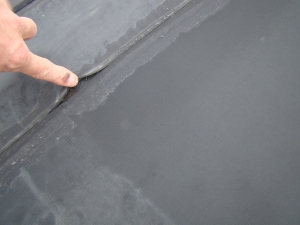
Seam and Lap Issues: EPDM roofs rely on seams where sheets meet. Over years of heat expansion, movement, and UV exposure, seams can loosen or separate, especially if the original installation had imperfect cleaning or primer steps. A small seam opening can let water travel and show up far from the actual entry point.
Flashing Failures at Penetrations and Walls: Pipes, HVAC curbs, skylights, and wall transitions require specialized flashing details. Flashings move differently than the field membrane and tend to fail first. Common signs include lifted edges, cracking at corners, or patch-on-patch areas that never seem to stop leaking.
Edge Metal and Perimeter Problems: Your roof’s perimeter has to resist uplift from wind and storms. If edge metal is loose, fasteners back out, or termination points fail, water can sneak in at the edges, especially during heavy rain and windy events.
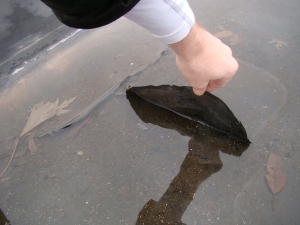
Ponding Water and Drainage: Flat roofs aren’t perfectly flat. They’re designed to drain. But clogged drains, settled insulation, or deflected decking can create ponding water. Standing water accelerates wear at seams and flashings and can expose hidden moisture problems below the membrane.
Punctures from Foot Traffic or Service Work: EPDM is tough, but sharp tools, dropped screws, and repeated foot traffic can puncture the membrane. Rooftop contractors who don’t use walk pads or designated paths are a common cause of recurring puncture repairs.
How Professionals Diagnose Rubber Roof Leaks
A lasting repair starts with locating the true source. A professional inspection may include:
- Visual review of seams, flashings, drains, and edges
- Moisture mapping to identify wet insulation areas
- A focused check around rooftop equipment and recent service zones
- Documentation of conditions, which is helpful for maintenance records and budgeting
In some cases, especially if leaks are recurring, additional diagnostics like infrared scanning may be recommended to find trapped moisture and define the repair scope accurately.
 Repairable vs. End-of-Life: A Quick Reality Check
Many EPDM roofs in Hoover can be repaired effectively, but there are times when repairs won’t be cost-effective long term. You may be closer to restoration or replacement if you have:
- Widespread seam failure across large areas
- Repeated leaks in multiple zones
- Large sections of wet insulation
- Aged membrane with brittleness, shrinkage, or extensive patch history
A reputable contractor will explain what’s happening and why, so you can make a confident decision.
Rubber Roof Repair Professionals
If you’re searching for rubber roof repair because you’re seeing leaks, staining, or persistent moisture, the best move is a professional assessment that identifies the source and recommends a repair that will last. Glick Roofing Systems serves Hoover, AL and surrounding areas with practical EPDM repair guidance and repair options based on your roof’s condition, age, and goals. Call 800-821-0205 today.
FAQ
How do I know if my rubber roof leak is coming from the seam or something else?
Leaks often originate at seams, flashings, drains, or roof edges. A clue is repeat leaking in the same general area after “caulking fixes.” A professional inspection can trace the water path and confirm the actual entry point, since water can travel under the membrane before showing up inside.
Can a rubber roof be repaired if there is wet insulation underneath?
Sometimes yes, but it depends on how widespread the moisture is. Small, isolated wet areas can often be removed and repaired correctly. If moisture is extensive, repair may not last because trapped water can keep migrating and weakening the system.
What is the best time of year to schedule EPDM rubber roof repairs in Alabama?
Most repairs can be completed year-round, but mild, dry conditions make it easier to achieve optimal adhesion and curing. In hot, humid stretches or during rainy periods, scheduling and material handling become more important, which is why planning ahead often helps.