
Commercial flat roofs take a beating year after year — weather, ponding water, foot traffic, and natural building movement all add up. Over time, seams loosen, cracks form, and leaks start to appear. Fortunately, not every aging roof needs to be torn off and replaced.
A fabric-reinforced roofing system is one of the most effective ways to restore, strengthen, and waterproof a commercial roof while extending its life — often for decades.
What Is a Fabric-Reinforced Roofing System?
A fabric-reinforced roofing system is a roof restoration method that combines a high-strength polyester fabric with a fluid-applied coating (such as silicone or acrylic). Together, they create a seamless, flexible, and durable membrane over an existing roof system.
Rather than removing the old roof, this system reinforces it — especially at the most vulnerable areas like seams, penetrations, and transitions.
How the Fabric System Works
1. Roof Inspection & Preparation
The process begins with a thorough roof inspection. Any wet insulation, damaged areas, or existing leaks are addressed first. The roof is then cleaned to ensure proper adhesion.
2. Base Coat Application
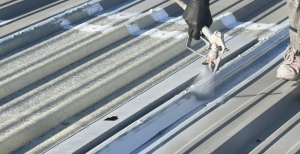
A fluid-applied base coating is installed across the roof surface or in targeted areas, depending on the project scope.
3. Fabric Reinforcement
A polyester fabric is embedded directly into the wet coating. This fabric adds tensile strength and helps the system flex with the building, preventing future cracks or seam failures.
Fabric is commonly installed:
- Over seams
- Around penetrations
- At transitions and flashing details
- Or across the entire roof for maximum protection
4. Final Top Coat
A final coating is applied over the fabric, sealing the system and creating a fully waterproof, seamless surface.
Why Fabric-Reinforced Systems Are So Effective
Fabric-reinforced systems solve many of the problems that cause flat roofs to fail:
- Reinforces weak points where leaks typically start
- Bridges cracks and seams instead of simply covering them
- Moves with the building, reducing stress-related failures
- Eliminates exposed fasteners and seams
- Improves resistance to ponding water and weather
The result is a roof that performs like new — without the cost or disruption of a full replacement.
Roof Types That Can Benefit
Fabric-reinforced systems work well on many commercial roof types, including:
- Modified bitumen (mod bit)
- Metal roofing systems
- EPDM
- TPO
- Aging flat or low-slope roofs
Each project is customized based on the existing roof condition and building needs.
Cost Savings Without Compromise
One of the biggest advantages of a fabric-reinforced roofing system is cost efficiency. Because the existing roof remains in place:
- Tear-off costs are minimized
- Disposal fees are reduced
- Installation time is shorter
- Business disruption is limited
In many cases, restoration costs significantly less than full replacement while delivering long-term performance.
Manufacturer Warranties Up to 20 Years
When properly installed by a qualified contractor, fabric-reinforced roofing systems can qualify for up to a 20-year manufacturer warranty.
That means long-term protection, predictable maintenance planning, and peace of mind for property owners and facility managers.
A Smarter Approach to Commercial Roofing
Fabric-reinforced roofing systems aren’t a temporary fix — they’re a proven, long-term solution for commercial buildings across the country. When installed correctly, they extend roof life, reduce costs, and deliver durable, watertight protection for years to come.
At Glick Roofing Systems, we specialize in evaluating existing roofs and recommending the right restoration solution — never more than you need, and never less than what’s required to protect your building.
Interested in seeing a fabric system in action? Check out our latest project videos and learn how our team restores commercial roofs without full replacement.