
If you manage or own a commercial building, few things are more frustrating than a roof leak that keeps coming back. You patch it, it holds for a while, and then the next heavy rain tells a different story. The truth is, most leaks in flat and metal roofing systems don’t start where people expect.
They start at the seams.
The Hidden Weak Points in Flat and Metal Roofs
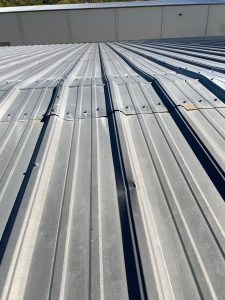
Whether it’s a flat membrane system or a metal roof, seams and connections are the most vulnerable areas on the entire roof. These are the transition points where materials meet, expand, contract, and age differently over time. Add weather exposure, foot traffic, and fastener movement, and small openings can quickly turn into costly leaks.
On flat roofs, seams can separate as membranes age or adhesives weaken. On metal roofs, fasteners can back out, sealant can fail, and seams can loosen due to constant thermal movement. Even when panels themselves look fine, these small failures allow water to travel where you can’t see it.
Why Leaks Often Show Up Inside — Far From the Source
One of the most confusing parts of roof leaks is that the interior damage doesn’t always line up with where the water is getting in. Water can enter at a seam or penetration, then travel along insulation, decking, or structural components before finally dripping into the building.
That’s why simply chasing stains inside the building rarely solves the problem. Without addressing the actual entry point on the roof, leaks tend to return.
Our Approach: Start at the Source
At Glick Roofing Systems, we focus on stopping leaks where they begin. Our team starts every evaluation by identifying seam failures, fastener issues, and vulnerable transitions. From there, we build a solution designed specifically for the roof system in place.
For metal roofs, this often includes cleaning and preparation, treating rusted areas, reinforcing seams, and sealing fasteners before applying a protective restoration system. For flat roofs, we address membrane seams, penetrations, and flashing details to create a continuous, watertight surface.
Restoration vs. Replacement
Not every roof needs to be torn off and replaced. In many cases, restoration is a smarter, more cost-effective option. A properly restored flat or metal roof can extend the life of the system by years, reduce disruption to daily operations, and help control long-term maintenance costs.
Our goal is always to give you clear options. If restoration makes sense, we’ll explain why. If replacement is the better path, we’ll be upfront about that too.
The Value of an Experienced Roofing Team
Roof systems are only as reliable as the people working on them. Our crews understand how different flat and metal systems behave over time and know where problems are most likely to occur. That experience allows us to solve issues thoroughly, not just temporarily.
Get Answers Before the Next Leak
If your flat or metal roof is showing signs of leaks, aging seams, or recurring repairs, a professional evaluation can save time, money, and frustration. Understanding where the problem starts is the first step toward fixing it the right way.
Glick Roofing Systems provides honest assessments, detailed workmanship, and solutions designed to protect your building for the long run.