
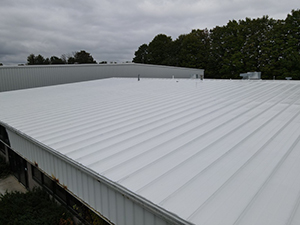
Commercial roof restoration can be a practical way to extend the service of an existing roof, but only when the roof is a suitable candidate. The decision should be based on the condition of the membrane, substrate, insulation, drainage, flashing, penetrations, and any confirmed moisture below the surface. A coating should not be treated as an insurance policy against every future leak or as a substitute for replacement when underlying conditions cannot support restoration.
For Forest Hills, TN commercial properties, Glick Roofing Systems provides commercial roofing and restoration services from its Nashville market. Call (615) 265-0598 to discuss an assessment and whether commercial roof restoration fits the building’s actual condition.
Lasting Commercial Roof Restoration

A lasting restoration starts with diagnosis, not coating application. The contractor should identify active leaks, deteriorated seams, failed flashing, punctures, ponding areas, previous repairs, drainage problems, and other conditions that could affect the finished system. Those findings should be connected to the proposed scope rather than assuming a fluid-applied system will solve every problem on the roof.
Restoration may involve localized repairs and preparation before the coating system is installed. If defects are left unresolved beneath the new surface, the restoration can fail to address the real cause of leakage or deterioration.
Substrate and Moisture Condition Come First
The existing roof and substrate have to be suitable for restoration. If insulation, decking, or other concealed components are suspected of being wet or damaged, the contractor should investigate enough to define the condition before approving a restoration scope. The exact method can vary by roof assembly and project, so moisture findings should be documented rather than assumed from surface staining alone.
Confirmed wet insulation, deteriorated decking, or widespread membrane failure can change the recommendation. Some roofs may still allow selective removal and repair before restoration, while others may be better candidates for replacement. The important point is that the recommendation should follow the extent and location of verified damage instead of a universal threshold.
Drainage and Detailing Still Matter
A restoration coating does not correct inadequate slope, structural deflection, blocked drains, undersized drainage components, or poorly detailed penetrations by itself. If ponding or drainage problems are present, the proposal should explain whether those conditions will be corrected, monitored, or remain outside the restoration scope.
Flashing, penetrations, seams, roof edges, and transitions around rooftop equipment also deserve specific attention. These details often require preparation or reinforcement before the field coating is applied.
What Makes a Roof a Better Restoration Candidate?
A commercial roof may be a reasonable restoration candidate when the existing assembly remains serviceable overall, defects are repairable, the substrate can support the proposed system, and moisture conditions are understood well enough to define the scope.
- The membrane or roof surface is generally intact enough to restore.
- Leaks and failed details can be repaired before coating.
- Moisture or deck concerns have been investigated and documented where needed.
- Drainage and penetrations can be addressed within the planned scope.
- The proposed coating system is compatible with the existing roof surface.
These are evaluation points, not guarantees. A contractor should explain why the specific roof qualifies and what conditions would cause the recommendation to change.
Maintenance Continues After Restoration
A restored roof still needs periodic inspection and maintenance. Drains, flashing, penetrations, seams, coating wear, rooftop traffic areas, and locations disturbed by later mechanical work should continue to be monitored. The right inspection frequency depends on the roof condition, building use, weather exposure, warranty requirements, and prior leak history rather than a single schedule for every property.
Keep closeout records showing what was repaired, where coating was applied, and any areas that require future monitoring. Useful records can include photos, repair locations, product information, approved scope changes, and warranty documents when applicable.
Commercial Roof Restoration Limits
Restoration can reduce the need for immediate tear-off on the right roof, but it should not be described as eliminating future leaks, guaranteeing a specific service life, or preventing replacement indefinitely. Performance depends on the existing assembly, preparation, application, drainage, later rooftop activity, weather exposure, and ongoing maintenance.
Warranty coverage should also be reviewed from the actual written terms. Glick Roofing Systems offers commercial restoration systems and warranty options, but owners should confirm what labor, materials, exclusions, maintenance obligations, and duration apply to the proposed project rather than relying on a general promise.
Contact Us Now!
Forest Hills, TN building owners evaluating an aging or leaking commercial roof can contact Glick Roofing Systems for help determining whether restoration, repair, or replacement better fits the documented roof condition. Contact us today at (615) 265-0598 to discuss an inspection and restoration scope.
Frequently Asked Questions
How do I know if my roof qualifies for restoration instead of replacement?
The contractor should evaluate the roof surface, substrate, moisture concerns, drainage, flashing, and repair needs. Restoration makes more sense when the existing assembly can support the proposed system after necessary repairs.
What happens if a coating is applied over trapped moisture?
Coating over unresolved moisture can leave concealed damage in place and may create future performance problems. Suspected wet areas should be investigated before the restoration scope is approved.
How long does commercial roof restoration last?
There is no universal lifespan. Performance depends on the existing roof, preparation, coating system, application quality, drainage, weather exposure, maintenance, and later rooftop activity.
Does commercial roof restoration come with a warranty?
Warranty options may be available, but coverage varies by system and project. Review the written terms for labor, materials, exclusions, duration, and maintenance requirements before work begins.