
A small leak on a flat roof can lead to bigger problems. One wet ceiling tile today may signal moisture that could damage insulation, stock, and interior finishes. If you own or manage a building in Lebanon, you know how quickly a Tennessee storm can expose a weak spot.
The good news is that localized flat roof problems can often be repaired without replacing the whole roof, provided the surrounding materials remain sound. The same principles apply to offices, retail stores, warehouses, and other commercial buildings across Middle Tennessee. Our guide on commercial flat roof repair in Brentwood, TN provides related information.
Below, we explain what flat roof repair fixes, how repair methods match the roof system, and how completed work should be checked.
Defects That Flat Roof Repair Fixes
Flat roofs can develop several common problems:
- Punctures and tears: Dropped tools, foot traffic near HVAC units, hail, and debris can damage the membrane.
- Open seams: Joints on TPO, PVC, and EPDM roofs can separate because of installation defects, movement, or deterioration.
- Blisters and cracks: Trapped air or moisture can cause blisters. Aging and movement can contribute to cracks, particularly on modified bitumen and built-up roofs.
- Loose or damaged flashing: Flashing seals transitions at walls, edges, pipes, and equipment. Damage or separation at these details can allow water entry.
- Ponding water: Persistent standing water may indicate blocked drainage, inadequate slope, or another underlying condition.
- Wet insulation: Water beneath the membrane can damage insulation. Interior stains or odors may prompt investigation, but testing or additional access may be needed to confirm concealed moisture.
Repair Methods That Match Your Roof
Not every patch works on every roof. The first step in a sound flat roof repair in Lebanon, TN is identifying the existing roof system. Using incompatible materials can cause a patch to fail or complicate later repairs.
Typical repair approaches include:
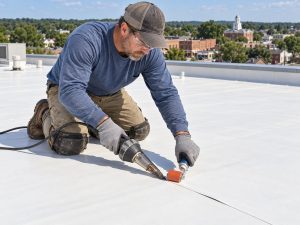
- TPO and PVC roofs: Compatible patches of the same membrane type are hot-air welded to properly prepared surfaces. Existing material must be capable of forming a reliable weld. TPO and PVC do not weld together.
- EPDM rubber roofs: Repairs use compatible cleaning products, primer, and EPDM patch or tape materials according to the manufacturer’s requirements.
- Modified bitumen roofs: Damaged areas are repaired with compatible materials using the application method approved for the system.
- Built-up roofs (BUR): Repairs rebuild affected plies with compatible materials and restore the protective surfacing where needed.
- Roof coatings: A compatible coating system may be suitable for restoration when the existing roof qualifies. Leaks, wet insulation, and damaged materials must be addressed before coating.
The goal is a repair that integrates with the existing system and addresses the defect without introducing incompatible materials.
Drainage and Flashing Checks
A patch alone may not solve a recurring problem if water cannot drain properly. A repair assessment should consider nearby drainage and flashing, along with the damaged area.
Drainage checks should include:
- Roof drains, scuppers, and gutters for debris or blockages
- Low spots where water collects
- Downspouts and discharge routes
Flashing checks should include:
- Roof edges and parapet walls
- Curbs around HVAC units and skylights
- Pipe boots and vent seals
- Exposed sealant joints showing cracks or separation
Leaks that appear to come from the roof surface may originate at flashing or another transition. Investigating those details helps reduce the risk of patching the wrong location. Our related guide on reliable flat roof repair services explains why finding the entry point matters.
The Limits of a Localized Repair
A spot repair can work well when damage is limited and the surrounding roof remains sound. But it has limits.
A localized repair may not be enough when:
- Leaks keep appearing in different places
- Large areas of insulation are wet
- The roof has widespread deterioration
- The membrane is cracking, separating, or under stress across many areas
- Persistent ponding affects broad areas because of drainage or slope problems
In these cases, repeated patching may not address the underlying condition. An assessment should compare repair, restoration, and replacement based on roof condition, expected performance, and costs. Coating is an option only when the roof is a suitable candidate.

How Completed Work Is Checked
A repair is not complete simply because a patch has been installed. Verification should match the roof system and the work performed:
- Seam checks: Cooled hot-air welded seams should be probed according to the membrane manufacturer’s procedure to identify openings or incomplete welds.
- Visual review: Check the repair, affected flashing, and nearby drainage for visible defects.
- Water testing when appropriate: Controlled testing or another suitable method may help verify a repair when conditions allow, with precautions to prevent additional interior damage.
- Cleanup: Remove repair debris and keep drainage paths clear.
- Photos and notes: Document the defect, completed work, materials, and any remaining concerns.
Monitoring the interior leak area after the next substantial rain is also useful. Any follow-up visit should be agreed on with the contractor.
Call Glick Roofing Systems for Flat Roof Repair in Lebanon, TN
Your flat roof protects your people, products, and business. Prompt attention to leaks and visible defects can help limit further damage.
For flat roof repair in Lebanon, TN, call Glick Roofing Systems at (615) 265-0598 or contact the team online to discuss your roof, available services, and assessment options.
Frequently Asked Questions
1. How Much Does Flat Roof Repair Cost in Lebanon, TN?
Cost depends on the roof type, extent of damage, access, and whether insulation or decking needs replacement. Request an assessment and a written quote describing the proposed repair, materials, and how any concealed damage will be priced.
2. How Do I Know if My Flat Roof Needs Repair?
Look for ceiling stains, recurring leaks, membrane cracks, damaged blisters, loose flashing, or persistent standing water. Wet insulation may affect energy performance, but higher utility bills can have many causes. A professional assessment helps identify the problem.
3. Can a Flat Roof Be Repaired Instead of Replaced?
Yes, in many cases. A localized repair may be suitable when damage is limited and the surrounding roof remains sound. Widespread moisture, membrane deterioration, or structural concerns may call for broader work. See the section on the limits of a localized repair.
4. How Long Does a Flat Roof Repair Last?
A properly installed repair using compatible materials can provide durable service. Its lifespan depends on the condition of the surrounding roof, preparation, installation, drainage, exposure, and maintenance.
5. Can Flat Roofs Be Repaired in Winter?
Some repairs can be completed in cold weather when safe conditions and material requirements allow. Moisture, ice, roof temperature, and curing requirements can limit permanent repairs. Temporary protection may be needed until conditions are suitable.
6. How Often Should a Flat Roof Be Inspected?
Spring and fall inspections are a common baseline, with additional checks after significant storms or suspected damage. Follow the roof manufacturer’s maintenance and warranty requirements.