
If you own or manage a commercial property in Tennessee, understanding your roof’s expected lifespan is one of the most important factors in long-term budget planning. From Memphis to Knoxville, business owners face a unique set of climate challenges that directly influence how long do commercial roofs hold up.
Glick Roofing Systems focuses on getting the most from your commercial roofing investment. Call 800-821-0205 today and schedule your consultation.
Average Lifespan by Roofing System
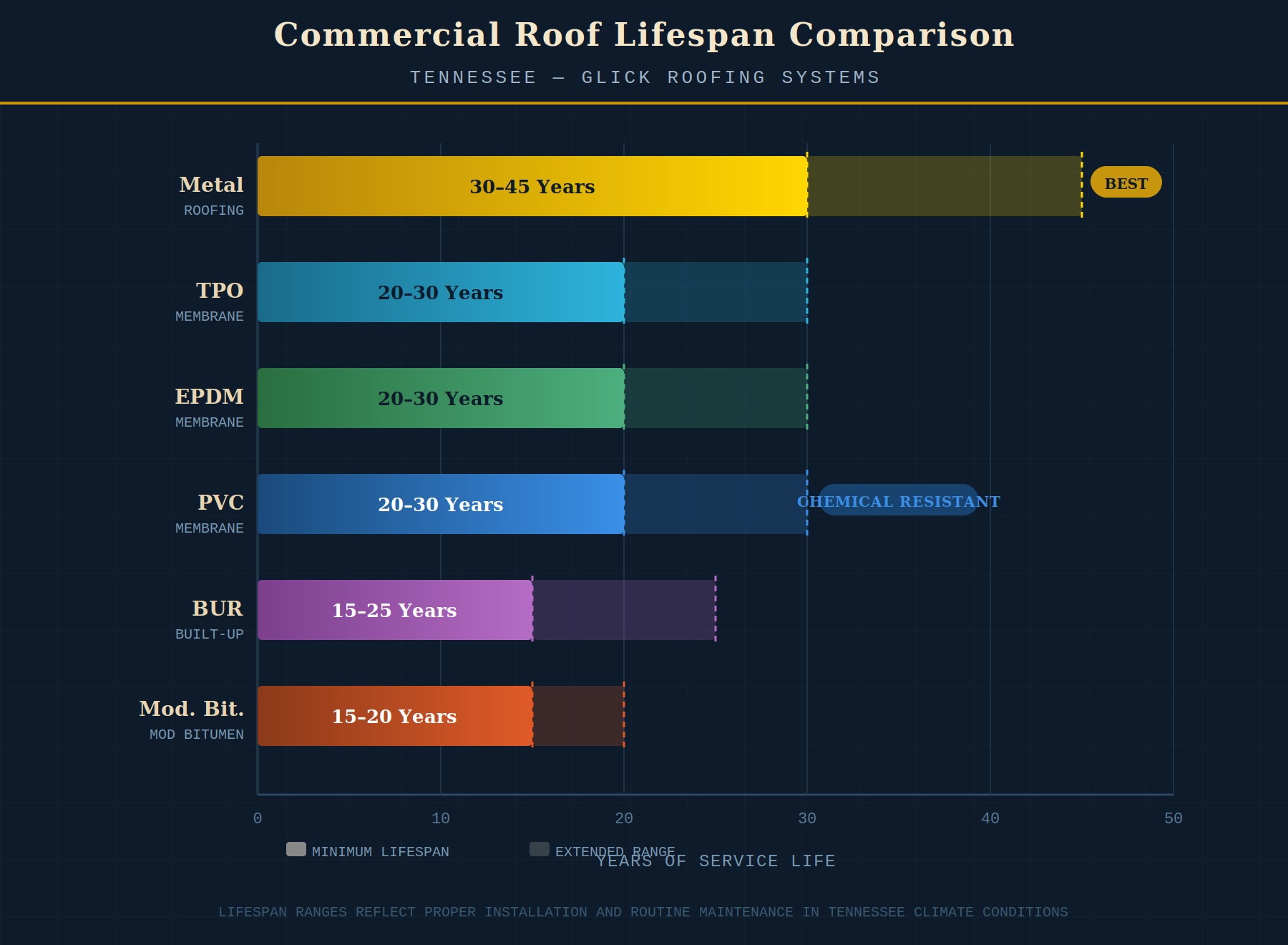
Not all commercial roofing materials are created equal. TPO and EPDM membrane roofs, two of the most widely installed systems in the region, typically last 20 to 30 years with proper care. PVC roofing offers a similar lifespan of 20 to 30 years, with added resistance to chemicals, grease, and moisture that makes it a strong choice for restaurants, food processing facilities, and buildings with rooftop HVAC equipment. Built-up roofing (BUR), a traditional multi-layer system, averages 15 to 25 years. Metal roofing stands at the top of the range, often lasting 30 to 45 years or more depending on the substrate and coating. Modified bitumen systems generally fall in the 15-to-20-year range. These figures represent ideal conditions. In Tennessee, actual performance depends heavily on how well the roof is maintained and how it holds up against local weather patterns.
How Tennessee Weather Affects Longevity of Commercial Roofs

Tennessee’s climate is tough on roofing systems. The state experiences hot, humid summers with temperatures regularly climbing past 90 degrees, followed by cold winters that can bring ice storms and freeze-thaw cycles. This temperature swings cause roofing membranes and seams to expand and contract repeatedly, accelerating wear over time.
Humidity is an equally significant factor. Moisture infiltration through seams, flashings, or improperly sealed penetrations creates conditions for mold growth, insulation degradation, and deck rot. Spring thunderstorms bring hail and high winds capable of tearing up membrane edges and loosening fasteners. Tennessee commercial roof owners should factor these regional stressors into any lifespan projection.
Maintenance Impact on Lifespan of Commercial Roofs
Routine maintenance is the single most controllable variable in commercial roof longevity. A well-maintained roof can reach or exceed its projected lifespan. A neglected one often fails years early. Semi-annual inspections, ideally in spring and fall, allow roofing professionals to identify and address ponding water, membrane blistering, failing caulk, and clogged drains before they escalate into major damage.
At Glick Roofing Systems, we work with Tennessee property owners to develop maintenance plans that protect their investment year-round. Even modest annual maintenance spending can prevent repair costs that run into tens of thousands of dollars and extend a roof’s functional life by several years.
Signs a Roof Is Near End of Life
Knowing when a commercial roof is approaching failure helps you plan proactively rather than react to an emergency. Common warning signs include:
- Persistent interior leaks that return after repairs
- Widespread membrane cracking or shrinkage
- Significant ponding water that does not drain within 48 hours
- Recurring fastener backout on metal systems
- Visible rust, corrosion, or delamination.
If a roof requires frequent patching or repairs are becoming increasingly costly, those are strong indicators that replacement is more economical than continued maintenance.
Planning for Replacement of Commercial Roofs
Proactive planning for roof replacement prevents operational disruptions and allows for better budgeting. Most building owners benefit from beginning the replacement planning process two to three years before the projected end of a roof’s life. This window allows time for condition assessments, competitive bidding, and financing arrangements.
Tennessee commercial property owners should also consider energy efficiency upgrades during replacement. Cool roofing options, improved insulation, and modern single-ply membranes can reduce HVAC loads and qualify for energy incentives. The Glick Roofing Systems team serves commercial clients across Tennessee and can provide a detailed roof assessment to help you understand where your current system stands and what your options are going forward.
To learn more, call 800-821-0205 and speak with a Glick Roofing Systems expert today.
FAQ
What is the longest-lasting commercial roofing material available in Tennessee?
Metal roofing generally offers the longest lifespan, often 30 to 45 years or more, making it a strong choice for Tennessee property owners focused on long-term value.
How often should a commercial roof in Tennessee be inspected?
Twice per year is the standard recommendation, with inspections typically scheduled in spring and fall to assess damage from winter weather and prepare for summer heat.
Is it ever worth repairing an aging commercial roof instead of replacing it?
Repairs can extend a roof’s life when the damage is localized, and the overall system is structurally sound. However, if repair costs are recurring and widespread, replacement typically offers better long-term value.