

Nashville commercial buildings experience a climate that swings from heavy rain to summer heat and humidity to winter freeze-thaw, and the roof feels all of it. That makes low slope roofing a system that has to be matched to Middle Tennessee weather, not just installed and left alone.
Glick Roofing Systems designs for those demands. Call Glick Roofing Systems at (800) 821-0205 for low slope roofing in Nashville, TN.
Low Slope Roofing Tackles Tennessee Weather with Ease
A low slope roof does not shed water the way a steep roof does, so it depends on a sealed surface and a plan for where the water goes. In a climate that delivers rain, heat, and freezing all in the same year, that surface has to answer several demands at once.
Even a roof that looks flat is not truly level. A working low slope roof is built with a slight, deliberate pitch so water heads for the drains rather than sitting still, and that pitch is the first thing to get right in this market.
Drainage Is the First Job of Low Slope Roofing
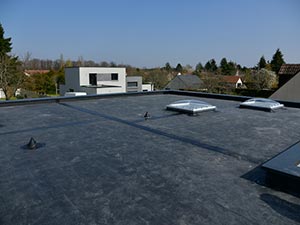
Positive drainage keeps water moving toward outlets, usually built in with tapered insulation that creates a gentle slope of about a quarter inch per foot. Without it, water pools in low spots and can remain there long after the storm has passed.
In Nashville that standing water is a winter problem as well as a summer one. Water caught in a low spot freezes overnight, expands, and works its way into seams, then thaws and repeats, prying at the membrane a little more each cycle. Good drainage design is what breaks that cycle before it starts.
Matching Material Choice to Weather Patterns
Summer brings its own load. Long stretches of heat and strong sun age a membrane and drive the surface temperature up, so reflectivity and a material that tolerates thermal movement both matter here. Humidity adds a hidden factor, pushing moisture vapor up into the assembly where it can condense if the layers are not built to manage it.
Storms also bring the risk of wind uplift, which is why attachment and edge detailing are specified for local conditions. Matching the membrane, insulation, and drainage to Middle Tennessee weather is what separates a roof that lasts from one that limps along.
Maintenance Needs of Low Slope Roofing
A low slope roof in this climate rewards a little seasonal attention. Clearing drains and low spots before heavy rain keeps water moving, and a look after summer storms catches lifted edges or seam stress while they are still easy to address. In a region that cycles through rain, heat, and freezing, that routine helps keep small issues from becoming major problems.
Timing the checks to the weather makes them more useful. A visit heading into winter finds the spots where standing water could freeze and pry at the membrane, and one after the summer heat catches sun and thermal wear. Matching maintenance to Middle Tennessee’s calendar keeps a low slope roof ahead of its climate rather than chasing it.
Specifying Nashville Low Slope Roofing
Low slope roofing earns its keep when drainage, materials, and detailing are all chosen for the local climate rather than a generic spec. For a Nashville building owner, that is what turns a flat roof into a system built for the weather it will actually face.
Specified for the weather and maintained on its rhythm, a low slope roof handles everything a Nashville year delivers, from summer storms to winter freeze, without the unexpected problems that can develop on a poorly planned roofing system.
(800) 821-0205For low slope roofing in Nashville, TN, contact Glick Roofing Systems at (800) 821-0205 today.
FAQ
What makes low slope roofing different from a steep roof?
Low slope roofs shed water slowly and rely on a sealed membrane and good drainage, so they need a commercial specialist rather than a shingle crew.
How does Nashville’s rainfall affect a low slope roof?
Frequent heavy rain makes standing water the main threat, so slope and drain placement matter as much as the membrane itself in this climate.
Which low slope systems handle Middle Tennessee weather best?
Single-ply membranes and coated systems built with proper slope perform well, as long as the insulation and drainage are designed for the local swings.