
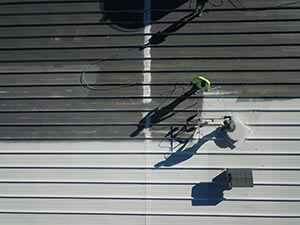
Kentucky summers are hot, humid, and long. Your commercial roof takes the full force of the sun all day. A roof coating is one of the simplest ways to push that heat back off the building and cut what you spend on cooling. At Glick Roofing Systems, we apply reflective coatings on commercial roofs throughout Bowling Green, KY. Call us at (800) 821-0205 to see what a coating could do for your energy bills.
How a Reflective Roof Coating Lowers Energy Use
A reflective roof coating lowers energy use by bouncing sunlight off the roof before it can turn into heat inside the building. A dark, uncoated roof soaks up the sun and radiates that heat down through the assembly, which forces your air conditioning to work harder. A light, reflective coating flips that. In a climate like Kentucky’s, that absorbed heat is the single biggest load on a commercial cooling system all summer.
To understand the value of a reflective coating, it helps to look at the two performance factors behind it, why they work best together, and what kind of energy savings a commercial building owner can realistically expect.
What a Roof Coating’s SRI Actually Measures
A roof coating’s SRI, or Solar Reflectance Index, is a single number that tells you how cool a roof surface stays in the sun. It folds two separate properties into one score, so a higher SRI means a cooler roof. That makes it the easiest figure to compare one coating against another.
SRI combines solar reflectance, which is how much sunlight the surface bounces away, and thermal emissivity, which is how quickly the surface lets go of the heat it does absorb. A bright white coating usually scores high on both, which is why white stays the standard for energy-focused commercial roofs. The higher that combined score, the less heat the roof passes into the space below.
Reflectance and Emissivity of a Roof Coating

Reflectance and emissivity both matter because a roof can be good at one and still run hot. Here is the part most building owners never hear. A surface might reflect most of the sunlight that hits it, but if it clings to the small amount it absorbs, it still heats up over a long Kentucky afternoon. That trapped heat then radiates downward long after the sun has moved off the roof.
Emissivity is what lets the roof shed that trapped heat instead of feeding it into the building. A quality reflective coating is made to do both at once. When you compare coatings, looking only at the reflectance figure can fool you, which is why the combined SRI score is the more honest measure.
What Energy Savings to Expect With a Roof Coating
Most commercial buildings see a clear drop in summer cooling demand once a reflective coating goes on. The exact savings hinge on your insulation, your roof size, and how hard your cooling system was running before. Bigger roofs with heavy sun exposure tend to gain the most.
A coating will not turn a poorly insulated building into an efficient one by itself. What it does is lift a major heat load off the top of the building, which eases the strain on your equipment and often stretches its life along the way. For a large flat roof under the Kentucky sun, that adds up across every cooling season. It is one of the few roofing upgrades that keeps returning value every hot month it stays in place.
A Roof Coating That Pays You Back
A reflective roof coating is a low-disruption way to make a commercial building cooler and cheaper to run, especially through a Kentucky summer. It protects the roof underneath at the same time, so you get energy savings and a longer roof life out of one project.
At Glick Roofing Systems, we help Bowling Green, KY building owners pick and apply the right coating for their roof and their goals. Call us at (800) 821-0205 to talk through a roof coating for your building.
FAQ
How does a reflective roof coating reduce energy costs on a commercial building?
It can lower rooftop surface temperatures by 50 degrees or more, which cuts the heat pushed into the building and the cooling needed to fight it.
What is the difference between solar reflectance and emissivity in a roof coating?
Reflectance bounces sunlight away on contact while emissivity releases absorbed heat. As an example, aluminum coatings often reflect well but emit poorly.
Is a roof coating worth the cost for a building that already has insulation in place?
Yes, since insulation slows heat moving through the roof but does nothing to stop the surface itself from baking, which a coating addresses.