
Your roof works hard every day. In Gallatin, it bakes in hot summer sun, gets soaked by spring storms, and sits through cold winter nights. Over time, that wear starts to show. You may see cracks, small leaks, or rusty spots. If the roof underneath is still sound, a coating may extend its useful life without a full replacement.
Glick Roofing Systems offers commercial roof coating services in the Nashville area. Whether you manage a building in Gallatin or nearby Hendersonville, this guide explains what makes a roof a candidate, what happens before the coating goes on, and what to ask about the warranty.
What Is a Roof Coating?
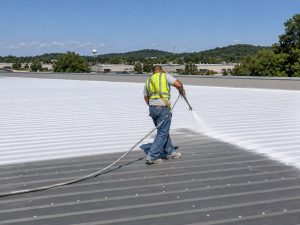
A roof coating is a liquid applied over an existing roof. Depending on the product, it can be rolled or sprayed. As it cures, it forms a continuous layer that helps protect the roof below from water and sunlight.
White and other light-colored coatings can reflect sunlight and reduce the heat the roof absorbs in summer. Any savings on cooling depend on the building, its insulation, and how it is used.
Which Roofs Can Be Coated?
The surface underneath the coating is called the substrate. It must be sound, dry, and compatible with the chosen product. These roof types may be candidates:
- Metal roofs: Sound panels may qualify once corrosion, loose fasteners, and open seams have been addressed.
- Single-ply roofs (TPO, EPDM, and PVC): The coating must be approved for the specific membrane. Some systems require an adhesion test and a compatible primer.
- Modified bitumen: A compatible coating may work after loose laps, cracks, and other damaged areas are repaired.
- Built-up roofs (BUR): Loose gravel and debris need to be removed. The remaining surface must be sound and suitable for the proposed coating.
- Spray foam roofs: A protective coating shields the foam from sunlight. Sound foam may be recoated after damaged areas are repaired.
A coating cannot fix a sagging deck, extensive damage, or widespread wet insulation. Those conditions may call for more extensive repairs or replacement. Learn more about commercial roof restoration options.
The Roof Coating Process
A coating project starts with checking the existing roof. The findings determine what needs repair, how the surface should be prepared, and which coating system fits.
Step 1: Moisture Checks
Insulation can be wet even when the roof looks fine from above. Coating over wet materials can trap moisture, contribute to blistering, and leave the deck exposed to further damage. Depending on the roof assembly, a moisture survey may use:
- Infrared scans: Under suitable conditions, often after sunset, a thermal camera can flag areas that cool at a different rate. Those temperature differences can point to trapped moisture.
- Capacitance meters: Readings can help identify areas that need a closer look when the roof materials are suitable for this method.
- Nuclear moisture surveys: A qualified specialist may take readings at marked points to identify differences across the roof assembly.
A survey can flag suspect areas. Where needed, a core sample lets a roofer inspect the layers directly. Any sample opening must be repaired afterward. Wet insulation needs to be removed and replaced before coating. If moisture is widespread, replacement may be the better choice.
Step 2: Repairs
A coating works best over a sound roof. Depending on what the inspection finds, repairs may include:
- Resealing open seams and securing or replacing damaged flashing.
- Replacing corroded or missing fasteners on metal roofs.
- Repairing holes, splits, and damaged or blistered areas with compatible materials.
- Fixing worn details around vents, drains, and HVAC units.
Standing water, also called ponding, needs attention before coating. Check for blocked drains and low spots, then confirm whether the proposed product and warranty allow any remaining ponding.
Step 3: Preparation
Coating bonds best to a clean, dry, sound surface. Preparation may include:
- Cleaning: Remove dirt, chalky residue, and loose material using a method approved for the existing roof.
- Drying: Allow the roof surface, seams, and low spots to dry before applying primer or coating.
- Rust treatment: Address corrosion on metal and replace sections that are no longer sound.
- Adhesion testing and primer: Check the bond and use the specified primer where the manufacturer requires it.
Gallatin’s rain can affect the schedule. The roof surface and forecast need to meet the product’s temperature, moisture, and cure requirements.
Step 4: System Application
The exact sequence depends on the product. A typical system may include:
- Detail work: Seams, flashing, and other vulnerable areas may need reinforcing fabric embedded in a compatible coating or sealant.
- Base coat: Where specified, the base coat goes over the prepared roof surface.
- Top coat: Where specified, the top coat provides the finished protective surface and helps bring the system to the required thickness.
Thickness matters because an underapplied coating can wear sooner than expected. A wet-film gauge can help check thickness during application. Ask what thickness the proposed system requires and how it will be checked.

Is the Investment Smart for Your Building?
Coating can cost less than a full tear-off and replacement when the existing roof is dry, sound, and compatible. Keeping the old roof in place can also reduce demolition and disposal. Whether the building can stay open depends on the scope, access, and ventilation needs.
Compare the full cost of the work, including repairs, preparation, and future upkeep. If the roof needs extensive repairs just to qualify, ask for a replacement estimate as well. For more on the trade-offs, see our guide to protecting your investment with roof coatings.
Product Warranty vs. Expected Service Life
A product warranty is written coverage from the manufacturer. Some warranties cover materials only. A separate system warranty may also cover specified labor or repairs, depending on its terms. A contractor’s workmanship warranty, if offered, is separate.
Expected service life is how long the coating is likely to protect your roof. It depends on the product, applied thickness, surface preparation, drainage, weather exposure, and maintenance.
Before you sign, get answers to three questions in writing:
- What does the warranty cover? Ask who issues it, what is excluded, and whether labor is included.
- What thickness is required? Ask how the finished system will meet the manufacturer’s specification and what records you’ll receive.
- What inspections and maintenance are required? Ask how often the roof needs attention and what you need to document.
A coating can keep working beyond its warranty term or wear out sooner, depending on its condition and exposure. Some systems can be cleaned and recoated when the protective layer wears, provided the roof is still sound and the new coating is compatible.
Why Gallatin Owners Choose Glick Roofing Systems
Glick Roofing Systems offers commercial roof coating and restoration in Middle Tennessee. If you’re considering roof coating in Gallatin, TN, start by finding out whether the existing roof is dry and sound enough to keep. That helps you compare coating with repair or replacement before committing to the work.
Call Glick Roofing Systems at (615) 265-0598 or contact us online to discuss a roof assessment for your Gallatin building.
Frequently Asked Questions
1. How long does a roof coating last?
It depends on the coating, its applied thickness, the existing roof, weather exposure, drainage, and upkeep. Some systems can be recoated later if the roof is still dry and sound. Ask about the proposed system’s expected service life and warranty coverage separately.
2. Can you coat a roof that is leaking?
A roof with a leak may still qualify after the source is found and repaired, wet insulation is removed and replaced, and the remaining roof is confirmed to be sound. Applying a coating over the leak can leave the underlying problem in place.
3. How much does roof coating cost in Gallatin, TN?
Roof size and the amount of repair and preparation are major cost factors. The coating type and required thickness also affect the price. A roof assessment and written estimate let you compare coating with replacement for your building.
4. Is silicone or acrylic coating better?
Some silicone coatings are rated for ponding water. Acrylic may suit a roof that drains well. The choice depends on the existing surface, drainage, and the specific product’s requirements. Correct drainage problems even when the coating can tolerate standing water.
5. Does a roof coating warranty cover labor?
Coverage varies. Some warranties cover materials only, while others include specified labor or repairs. Ask who issues the warranty, what it covers, and what it excludes. Get the terms in writing before work begins.
6. Do I have to close my business during work?
Some buildings can stay open during coating work. It depends on the scope, roof access, ventilation, and whether entrances or parking areas need temporary restrictions. Discuss operating hours, deliveries, and air intakes before scheduling.