
Summer sun, spring storms, and cold winter nights all take a toll on commercial roofs in Lebanon. Seams can open, flashing can loosen, and small cracks can let water in. When the roof starts showing its age, it’s easy to assume you need a full replacement.
If the roof is still sound and damage is limited, a coating may extend its service life without a full tear-off. Glick Roofing Systems offers commercial roof restoration and coating services. Here’s what to check before choosing a coating for your building.
What Is a Roof Coating?
A roof coating starts as a liquid that can be sprayed or rolled onto a properly prepared roof. It cures into a continuous protective layer. Seams, edges, and penetrations still need their own repair or reinforcement details before the main coating goes on.
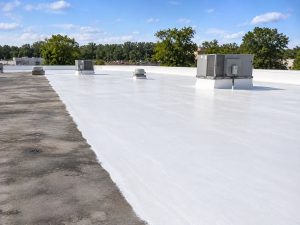
A white or light-colored coating can reflect sunlight and reduce heat gain through the roof. Any cooling savings depend on the building’s insulation, cooling system, and how the space is used.
Which Roofs Can Be Coated?
The surface under the coating must be sound, dry, and compatible with the proposed product. Potential candidates include:
- Metal roofs on warehouses and shops
- Compatible TPO, PVC, and EPDM single-ply membranes
- Modified bitumen roofs
- Suitable built-up roofs, depending on the surface and how it can be prepared
- Spray foam roofs that need a renewed protective coating
Some membranes need a compatible primer. Metal roofs may need corrosion treatment and fastener repairs. A weak deck, widespread moisture, or a roof surface that’s coming apart can make repair or replacement a better choice.
Step One: Checking for Hidden Moisture
A roof can look dry on top while the insulation underneath is wet. Coating over wet materials can lead to blistering, poor adhesion, and further damage. Depending on the roof, a moisture evaluation may include:
- Infrared scans: Surface temperature patterns can point to areas that need a closer look.
- Moisture meter readings: Readings can help compare suspect areas with areas that appear dry.
- Core samples: A small sample can show the roof layers and confirm whether the insulation is wet at that spot.
Wet insulation should be removed and replaced before coating. If moisture is widespread, a coating may no longer make sense.
Step Two: Making Repairs
Before coating, fix active leaks and address the damage they caused. Depending on what the assessment finds, repairs may include:
- Replacing wet insulation or damaged roof sections
- Repairing open seams and split laps
- Securing or replacing damaged flashing
- Replacing loose or worn fasteners and treating localized corrosion on metal roofs
- Clearing drains and investigating recurring standing water
A coating protects the surface. It can’t strengthen a damaged deck or correct a drainage problem by itself. For more on when a coating can help, see our guide to protecting a commercial roof with coatings.
Step Three: Cleaning and Prep Work
Dirt, oil, chalky residue, and loose material can keep the coating from bonding. Clean the roof using a method suitable for the existing surface, then let it dry. Some systems call for a primer. An adhesion test on a small area can help confirm whether the proposed coating and primer will bond before the full roof is covered.
Step Four: Applying the Coating System
The number of coats and the reinforcement details depend on the selected system. A base-and-topcoat system may involve:
- Reinforce details: Treat seams, edges, fasteners, and pipe flashing, adding fabric where specified.
- Apply the base coat: Cover the roof at the specified application rate.
- Apply the topcoat: Add the next layer once the base coat is ready under the manufacturer’s instructions.
- Verify thickness: Check that the coating meets the specified thickness, measured in mils.
Rain, dew, and cold can affect application or curing. The roof surface and forecast need to meet the product’s requirements for each coat.

Product Warranty vs. Service Life: What’s the Difference?
A product warranty spells out what the issuer covers, how long coverage lasts, and what conditions apply. Some warranties cover material defects only; broader system coverage may also address labor or certain leaks. Check the written terms for thickness, maintenance, and exclusions before comparing warranties.
Service life is how long the coating protects the roof in practice. Preparation, installed thickness, drainage, weather, foot traffic, and maintenance all affect it. A coating may wear out before its warranty term ends or last beyond it. If the roof underneath remains sound, cleaning and recoating may renew the protective surface without a full tear-off.
Why Lebanon Building Owners Call Glick Roofing Systems
Glick Roofing Systems offers commercial roof inspections, repairs, restoration, and replacement. If you’re weighing those options, start with the roof’s condition: where it leaks, whether the insulation is wet, and how well water drains.
Call Glick Roofing Systems at (615) 265-0598 or contact us online to discuss a roof inspection and coating options for your Lebanon building.
Frequently Asked Questions
1. How much does roof coating cost in Lebanon, TN?
Cost depends on the roof size and type, the repairs and preparation needed, and the coating system. Coating can cost less than full replacement when the existing roof can stay in place and needs only limited repairs. Ask for an estimate based on your roof’s condition.
2. How long does a roof coating last?
Service life depends on the product, installed thickness, drainage, weather exposure, and upkeep. Ask about the expected service life of the proposed system and review the warranty separately. A sound roof may qualify for recoating when the surface wears down.
3. Can you put a coating on a leaking roof?
A roof that has leaked may still qualify after the leak source is repaired and wet insulation is replaced. If the damage is widespread, a larger repair or replacement may be needed.
4. Does roof coating lower energy bills?
A reflective white coating can reduce heat gain through the roof. The effect on cooling costs depends on insulation, weather, and how the building is used.
5. Can roof coating be applied in winter?
It depends on the product and the weather. Check the required air and surface temperatures, moisture limits, and curing conditions. Overnight lows and dew matter as much as the daytime forecast.
6. Is roof coating better than replacing my roof?
Coating can be a lower-cost choice when the roof is sound, drains properly, and can be made dry through limited repairs. If the deck is damaged or moisture is widespread, replacement may make more sense.