
A roof leak may start long before you see the water stain. A drain gets clogged, a seam opens, or a rubber boot around a vent pipe cracks in the sun. In Mount Juliet, hot and humid summers, spring storms, and winter temperature swings wear on roofs. That includes warehouses off I-40 and shops near Providence. Roof maintenance in Mount Juliet, TN means finding small problems on a schedule, before they cause more extensive damage.
For a quick starter list, see our commercial roof maintenance tips. This guide goes further. It covers what to check on your type of roof, where leaks can begin, and how to keep useful service records.
A quick safety note: Roof access should be limited to trained people using appropriate access and fall protection. The rooftop checks below are tasks for qualified professionals.
What owners can do from the ground or inside: Look for ceiling stains, new musty smells, overflowing gutters, unusual discharge from scuppers, and branches touching the roof.
What your roofer should handle: Roof access, seam checks, fastener and flashing inspections, and rooftop drain maintenance.
Start With Your Roof Type
Each roof material wears in its own way. Maintenance should match the system and follow the manufacturer’s requirements.
TPO and PVC Roofs
These single-ply roofs have hot-air welded seams.
- Inspect seam edges for openings, damage, or areas needing closer assessment.
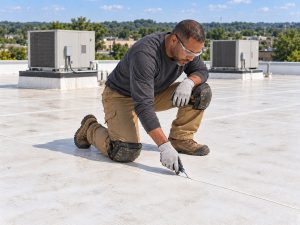
- Check for scuffs and punctures near HVAC units and regular service routes.
- Inspect edges and corners for stressed membrane or damaged flashing.
- Use cleaning products and methods approved for the existing membrane. Excessive pressure or unsuitable tools can damage the roof.
- Use compatible walkway protection along frequently used equipment access routes.
EPDM Rubber Roofs
EPDM seams generally use compatible adhesives or seam tapes rather than hot-air welding.
- Check seam edges for separation or deterioration.
- Look for tension or shrinkage at walls, corners, and penetrations.
- Keep incompatible oils, grease, and petroleum products off the membrane.
Metal Roofs
Metal roofs on warehouses and industrial buildings need checks suited to their panel and attachment system.
- On exposed-fastener roofs, inspect for backed-out screws and deteriorated sealing washers.
- Look for corrosion at panel laps, cut edges, gutters, and penetrations.
- Check seams, trim, and exposed sealant joints for damage or separation.
- Have loose fasteners and worn attachment points assessed before repair. Replacement components should match the system’s requirements.
Coated Roofs
A restoration coating can extend the service life of a suitable existing roof, but it still needs maintenance.
- Look for exposed substrate, peeling, cracking, or other changes in the coating.
- Give persistent ponding areas extra attention and assess the underlying drainage.
- Follow the coating manufacturer’s inspection, repair, and maintenance requirements, including any warranty conditions.
Drains, Scuppers, and Gutters: Where Water Wins or Loses
Flat and low-slope roofs depend on clear drainage routes. A blocked drain can allow water to accumulate and place additional demands on the roof.
Rooftop drainage maintenance should include:
- Removing leaves, dirt, and debris from drain strainers
- Checking that required strainers are present, secure, and unobstructed
- Checking scuppers, gutters, and downspouts for restricted flow
- Keeping overflow drainage clear
- Investigating persistent standing water, including areas still wet roughly 48 hours after rain, while considering the roof design and system requirements
- Recording ponding locations on a roof map to track changes
In Mount Juliet, fall leaf buildup makes a drainage check useful before winter. Properties near mature trees may need additional clearing during leaf fall. Overhanging branches should also be managed safely to reduce debris and contact with the roof.

Seams and Flashings: The Weak Spots
Leaks often develop where the roof meets walls, curbs, pipes, skylights, and edges. These details deserve attention across Middle Tennessee. Our guide on roof maintenance in Franklin, TN covers related maintenance considerations.
Here’s what a professional should check:
- Pipe boots: Cracked collars, damaged flashing, loose clamps, and failed seals
- Pitch pans: Sealant that has cracked, shrunk, or separated; repairs need compatible materials and preparation
- Wall flashing: Loose terminations, damaged counterflashing, and deteriorated sealant
- Edge metal: Loose sections, open joints, and damaged attachments
- HVAC service areas: Loose hardware, discarded panels, punctures, or damaged flashing after equipment work
- Kitchen exhaust areas: Grease accumulation and compatibility with the roof membrane; protection should follow the roofing and exhaust-system requirements
Keep a Simple Service Record
Good records help track roof condition, plan budgets, and document maintenance when warranty or insurance questions arise.
For each visit, record:
- The date and who performed the inspection or maintenance
- Photos of findings, with locations marked on a roof map
- Repairs completed and materials used
- Items needing further work and their recommended timing
- The roof type, installation year if known, and warranty details
Keep everything in one folder or shared drive. Dated records can help establish conditions before and after a storm, although they do not guarantee insurance coverage or warranty acceptance. Check the actual terms for maintenance and documentation requirements.
Follow-Up Timing That Works in Mount Juliet
A useful plan has set dates rather than waiting for a leak.
- Spring: Review winter damage and drainage before further storms.
- Fall: Address leaf buildup and prepare for winter conditions.
- After significant storms: Arrange an assessment promptly when safe access and weather allow.
- After rooftop work: Check for damage following HVAC, solar, sign, or other equipment work.
- Monthly interior checks: Look for new ceiling stains, drips, or musty odors from safe, accessible locations.
Repair timing should reflect the finding’s urgency. Active leaks, loose materials, and safety concerns need prompt attention. Other defects can be scheduled according to their condition and the manufacturer’s requirements. Previously repaired areas should be reviewed during subsequent inspections.
Get Help With Roof Maintenance
A useful maintenance plan should fit your roof material, condition, drainage, surrounding trees, and rooftop activity. The written scope should explain inspection areas, cleaning, minor repairs, documentation, and work that requires a separate quote.
If your roof hasn’t been checked in a while, call Glick Roofing Systems at (615) 265-0598 or contact the team online to discuss roof maintenance in Mount Juliet, TN and available service options.
Frequently Asked Questions
1. How Often Should a Commercial Roof Be Maintained in Mount Juliet, TN?
Spring and fall inspections are a common baseline, with additional checks after significant storms or rooftop work. Roof condition, nearby trees, equipment traffic, and manufacturer or warranty requirements may call for more frequent maintenance.
2. What Happens During a Roof Maintenance Visit?
The agreed scope may include checking the membrane or panels, seams, flashing, drainage, and equipment details. Cleaning and minor repairs may also be included. Confirm which tasks, photos, written findings, and separately priced repairs are covered before booking.
3. How Much Does Commercial Roof Maintenance Cost?
Cost depends on roof size, material, condition, access, and the work included. A written quote should identify inspection, cleaning, repairs, documentation, and any exclusions.
4. How Can I Tell if My Flat Roof Has a Drainage Problem?
Persistent standing water can indicate blocked drains, inadequate slope, or another underlying condition. Water remaining roughly 48 hours after rain warrants investigation, with the roof design and system requirements taken into account. Observe only from safe locations.
5. Does Regular Maintenance Protect My Roof Warranty?
Maintenance helps meet requirements included in many roof warranties, but the written terms control coverage. Keep dated inspection reports and repair records, and address damage within any required timeframe.
6. What Should I Do After a Storm Hits My Building?
Check safe interior areas for leaks or stains and observe the exterior from the ground. Keep people away from sagging ceilings, loose materials, and wet electrical equipment. Arrange a professional assessment because some roof defects are not visible from the ground.