

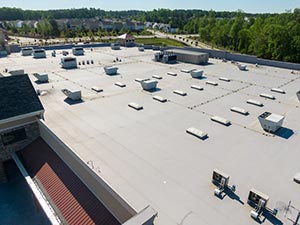
A commercial roof in Smyrna spends most of the year baking under a hot Tennessee sun, and that heat lands directly on your cooling bill. TPO roofing has become a favorite for owners who want to push back on that cost, because of what its surface does with sunlight.
Call Glick Roofing Systems at (800) 821-0205 for TPO roofing in Smyrna, TN.
How TPO Roofing Lowers Energy Use
TPO stands for thermoplastic polyolefin, a single-ply membrane that comes in a bright white surface. That white color is the whole story when it comes to energy. A dark roof absorbs the sun’s heat and passes it down into the building, while a white TPO membrane reflects most of it back into the sky before it ever becomes a problem.
Less absorbed heat means less heat working its way into the space below, which means the air conditioning runs less to hold the same indoor temperature. Across a long Tennessee cooling season, that lighter workload is where the savings come from. The roof is doing part of the cooling job for free.
Solar Reflectance Index in TPO Roofing
When owners compare roofs for energy performance, the number to look at is the solar reflectance index, or SRI. It is a single rating that combines how much sunlight a surface reflects with how quickly it releases the heat it does absorb. A higher SRI means a cooler roof surface in the sun.
A white TPO membrane carries a high SRI, while a dark membrane sits near the bottom of the scale. That gap is not academic. On a clear summer afternoon in Smyrna, a dark roof can run sixty to eighty degrees hotter than a reflective white one. Every one of those degrees is heat your building either reflects away or pays to remove. SRI is the shorthand for which side of that equation your roof lands on.
Smyrna Cooling Savings
The reflective advantage turns into real money during the months Tennessee runs hottest. Building owners in hot, humid climates who switch to a reflective membrane commonly see cooling costs drop by a noticeable share through the summer, with the exact figure depending on insulation, HVAC efficiency, and how much roof sits over conditioned space.
The economics get more favorable the bigger the roof. A large warehouse or retail box has a vast surface collecting sun all day, so a reflective membrane has more area to work across and more heat to turn away. For a building running air conditioning eight or nine months a year, that recurring summer savings adds up across the life of the roof, which is a meaningful part of the case for choosing TPO in the first place.
Heat, Humidity, and Long-Term Math
Smyrna’s humidity adds to the load, because muggy air makes a cooling system work harder to keep a building comfortable. A roof that stays cooler eases that strain and helps the equipment last, which is a quiet saving that owners often overlook next to the monthly bill.
Considered over years rather than months, a reflective roof is part energy strategy and part equipment protection. The membrane keeps reflecting summer after summer, so the savings repeat for as long as the surface holds its performance. That steady return makes the energy case for TPO more than a one-season talking point.
Smyrna TPO Roofing Specialists
A reflective white membrane turns your roof from a heat collector into part of your cooling plan, and in a climate like Smyrna’s that pays off every summer. Match it to your building and the energy math works in your favor for years. For TPO roofing in Smyrna, TN contact Glick Roofing Systems at (800) 821-0205 today.
FAQ
Does TPO maintain its reflective performance over time, or does it fade with age?
Reflectivity does dip slightly as the surface weathers and collects dirt, but periodic cleaning restores most of it, and quality membranes hold strong reflectance for years.
Does a reflective roof help in Tennessee winters, or only in summer?
The biggest gains are in summer, and the small winter heat-gain tradeoff is minor here because Tennessee’s cooling season is far longer and costlier than its heating season.
Can a reflective TPO roof qualify for energy efficiency incentives?
Many high-SRI roofs meet cool-roof program standards, which can support certain commercial energy tax deductions worth asking a tax professional about.