
Planning a commercial roofing project in Tennessee means preparing for more than just materials and labor. From the hills of East Tennessee to the flatlands along the Mississippi River, local conditions, building codes, and seasonal patterns all play a role in what you can expect to invest. Understanding commercial roofing costs is crucial to making intelligent investment decisions.
At Glick Roofing Systems, we believe informed clients are empowered clients. To learn more, call 800-821-0205 today and schedule a consultation.
Commercial Roofing Cost Factors for Tennessee
Understanding the key cost drivers helps business owners make smarter decisions and avoid budget surprises.
Labor Costs
Labor is one of the most significant line items in any commercial roofing estimate. In Tennessee, labor rates vary by region, with larger metro areas like Nashville and Memphis typically commanding higher rates than rural markets. Beyond geography, the complexity of the work itself affects how many skilled tradespeople are required and how long the project takes.
Specialized tasks such as installing TPO membranes, working with metal roofing systems, or applying reflective coatings require trained technicians. Projects that demand precision detailing around HVAC units, skylights, or drainage systems also increase labor hours. When you request a proposal from Glick Roofing Systems, labor estimates are broken down transparently, so you understand exactly what you are paying for.
Material Selection

The roofing material you choose has a direct impact on both upfront cost and long-term value. Common commercial options in Tennessee include TPO, EPDM, modified bitumen, metal, and built-up roofing systems. Each carries a different price point, lifespan, and maintenance profile.
TPO and EPDM membranes are popular for flat or low-slope roofs due to their durability and energy efficiency, which matters in Tennessee’s hot, humid summers. Metal roofing, while a higher initial investment, often delivers a lower total cost of ownership over decades. The right material depends on your building type, roof slope, budget, and how long you plan to own the property. Glick Roofing Systems can walk you through the trade-offs, so you select a system that fits both your project and your goals.
Roof Size and Complexity
Square Footage and Layout
Cost is directly tied to the size of your roof. Larger surfaces require more material and more labor hours. However, square footage alone does not tell the whole story. A 10,000-square-foot roof with a straightforward layout will almost always cost less per square than a similarly sized roof with multiple levels, steep slopes, or intricate architectural features.
Penetrations and Details
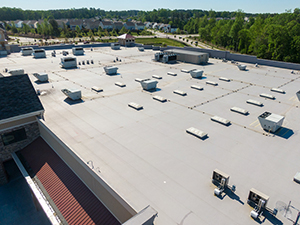
Every penetration, whether a pipe, vent, drain, skylight, or HVAC curb, requires custom flashing and careful waterproofing. The more penetrations present, the more time and material the job demands. Buildings with rooftop mechanical equipment, parapet walls, or expansion joints add additional layers of complexity that influence the final estimate.
Access and Safety Requirements for Commercial Roofing
Commercial job sites often present access challenges that residential projects do not. If your building is multi-story, located in a dense urban area, or has limited staging space, additional equipment such as cranes, aerial lifts, or scaffolding may be required. This equipment comes with rental costs as well as additional labor time for setup and breakdown.
OSHA safety compliance is non-negotiable on commercial roofing projects, and rightly so. Fall protection systems, safety monitors, and site-specific safety planning all factor into project costs. At Glick Roofing Systems, safety is never cut from a budget. Proper safety protocols protect workers, limit liability for building owners, and ensure the job is completed without incident.
Weather and Seasonal Timing
Tennessee’s climate presents real scheduling considerations for roofing contractors. Summer brings intense heat and humidity, which can affect application windows for certain adhesives and coatings. Spring and fall are generally preferred for commercial roofing work, as moderate temperatures support better material performance and faster crew productivity.
Emergency repairs following severe weather events, such as hailstorms or high winds common in Middle Tennessee, often carry premium pricing due to elevated demand and expedited timelines. Planning your project in advance allows you to schedule during optimal conditions and avoid the surge pricing that follows storm seasons. Glick Roofing Systems recommends proactive roof assessments each year so Tennessee building owners can address concerns before they become urgent.
Tennessee Expert Commercial Roofing Contractor
Contact Glick Roofing Systems today at 800-821-0205 to schedule a professional roof assessment and receive a comprehensive estimate tailored to your building.
FAQ
What is the best time of year to schedule a commercial roof replacement in Tennessee?
Spring and fall offer the most favorable conditions. Moderate temperatures improve material adhesion and reduce weather-related delays, and scheduling outside peak storm season helps avoid demand surges that affect pricing and availability.
How does roof complexity affect the overall project cost?
Roofs with multiple levels, steep slopes, numerous penetrations, or rooftop equipment require more labor hours and custom flashing work. Two roofs of similar size can carry significantly different price tags depending on layout and condition.
Does building location within Tennessee affect what I pay for commercial roofing?
Yes. Labor rates are higher in larger markets like Nashville and Memphis than in rural areas. Site accessibility also varies; urban buildings with limited staging space may require additional equipment, adding to the overall project cost.