
A small drip over a store shelf. A stained ceiling tile in the break room. A puddle on the roof that never seems to dry. These are often the first signs that a commercial roof needs attention.
Mount Juliet’s shops, offices, and warehouses face hot summers, strong spring storms, and winter freeze-thaw cycles. Over time, those conditions can take a toll on seams, flashing, and roof edges.
If water is coming in after a storm, call for help right away. Glick Roofing Systems’ guide to emergency roof repair in Nashville, TN, explains what to do when a leak can’t wait. For slower leaks or recurring trouble spots, planned commercial roof repair in Mount Juliet, TN, starts with finding the source and deciding how far the damage extends.
Roof Defects This Service Repairs
A leak indoors tells you where water showed up. The opening in the roof may be somewhere else. Common problems to look for include:
- Open seams: The edges where TPO, PVC, or EPDM sheets meet can loosen or separate over time.
- Cracks, splits, and blisters: Surface wear can lead to cracking. Trapped air or moisture can raise blisters that need a closer look.
- Punctures and tears: Hail, storm debris, dropped tools, and rooftop traffic can damage the membrane.
- Loose or failed flashing: Gaps can form where the roof meets walls, pipes, vents, and rooftop equipment.
- Metal roof problems: Loose screws, worn washers, rust, and open panel laps can give water a way in.
- Wind damage: Strong gusts can lift edge metal or pull the membrane loose at corners.
- Ponding water: Water still standing about 48 hours after rain can point to blocked drainage or a low spot that needs attention.
Repair Methods That Match Your Roof
A repair starts with identifying the existing roof material and finding sound material for the patch to bond to. A product that works on one roof may fail on another. If the roof is under warranty, check the manufacturer’s repair requirements before work starts.
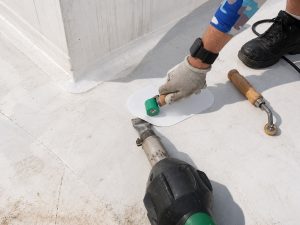
- TPO and PVC: A compatible membrane patch can be heat-welded to a clean, sound area around the damage.
- EPDM rubber: A compatible primer, patch, or seam tape can repair a puncture or loose seam after the surface is prepared.
- Modified bitumen: Damaged areas can be repaired with compatible roofing sheets. The application method depends on the existing assembly and the repair product.
- Built-up roofing: A localized repair can rebuild damaged layers and restore the protective surface, including gravel where the assembly calls for it.
- Metal: Repairs may include replacing failed fasteners and washers, sealing panel laps, or addressing corrosion. Sealants and coatings need to be compatible with the panel finish.
If the roof is dry and sound after repairs, a compatible restoration coating may extend its useful life. Widespread moisture or a weak deck calls for a different scope of work.
Drainage and Flashing Checks
Drainage and flashing can help explain why a leak keeps coming back. A patch may seal one opening, but water can still collect nearby if a drain is blocked or the roof slopes away from it.
- Drainage: Check drains, strainers, scuppers, gutters, and downspouts for blockages or damage. Dirt rings and debris lines can show where water has collected, even if the roof is dry during the visit. If water keeps collecting after the outlets are clear, the slope or drain location may need a closer look.
- Flashing: Look for cracks, gaps, loose metal, or lifted edges at walls, HVAC curbs, pipe boots, skylights, and roof edges. A small gap may be repairable, while split or detached flashing may need replacement.
For related guidance, see Glick’s page on commercial roofing and repair in Brentwood, TN.
The Limits of a Localized Repair
A spot repair works best when the damage is confined to one area and the surrounding roof is sound. These findings can point to a larger problem:
- Wet insulation beyond the leak: A patch won’t dry the layers below. A moisture survey or targeted samples may help determine how much material needs to be removed.
- Repeated failures: Several patches in the same area can point to an unresolved issue, such as movement, poor drainage, or damaged flashing.
- Widespread membrane wear: Cracking, shrinkage, or brittle material across the roof can leave too little sound surface for a reliable patch.
- Deck damage: Rotted or corroded decking needs evaluation and repair before it can support new roofing work.
- Warranty requirements: If coverage is still active, confirm whether the manufacturer requires specific materials, methods, or approval before repairs.
Depending on what the assessment finds, the next step may be a larger repair, restoration, or replacement. A coating is an option only when the remaining roof is suitable for it.
How Completed Work Is Checked
Final checks depend on the roof material and the repair. The goal is to check the new work and any nearby details that contributed to the original problem.
- TPO and PVC: New welds can be checked with a seam probe after they cool.
- EPDM: Check that the patch and taped edges lie flat and are fully bonded, using the manufacturer’s recommended method.
- Modified bitumen and built-up roofs: Look for loose edges, open laps, or gaps in the restored surface.
- Metal: Check that replacement fasteners and washers are seated correctly and repaired panel laps are sealed.
Closeout can also include reviewing nearby flashing and drainage, clearing scraps and fasteners, and documenting the repair. Controlled water testing may help trace or check a leak when the roof and site conditions allow. If interior access is available, observations below the repair can help track whether new moisture appears.
Ask which checks, photos, and written records are included in your repair scope. If you notice fresh staining or dripping after the next rain, note the date and location and contact the roofer for follow-up.

Why Mount Juliet Businesses Choose Glick Roofing Systems
Glick Roofing Systems is a licensed and insured commercial roofing contractor with a Nashville office on Elm Hill Pike. The company provides commercial roof repair, restoration, and replacement services in the Nashville area. If you have an existing roof warranty, share it when you call and ask what coverage applies to the proposed repair.
Call Glick Roofing Systems at (615) 265-0598 or contact the Nashville office to discuss commercial roof repair in Mount Juliet, TN.
Frequently Asked Questions
1. How much does commercial roof repair cost in Mount Juliet, TN?
Cost depends on the roof material, the size and location of the damage, and how easy the area is to reach. Hidden moisture or damage below the membrane can also affect the scope. An on-site assessment helps establish what needs to be included in the estimate.
2. How do I know if my roof needs repair or replacement?
Localized damage can often be repaired if the surrounding membrane, insulation, and deck are sound. Widespread wet insulation, brittle membrane, or several failed patches may point to a larger repair or replacement. Moisture testing can help clarify the extent of hidden damage when needed.
3. How long does a commercial roof repair take?
A small patch may take one visit. Larger repairs, limited access, or weather that prevents materials from bonding properly can extend the schedule.
4. Can you fix my roof without closing my business?
Some repairs can be completed while the building stays open. It depends on the work area, roof access, and what’s happening inside. Discuss entrances, deliveries, noise, and any areas that need to stay protected when you review the schedule.
5. How often should a commercial roof be inspected?
Spring and fall are good times for routine inspections. Consider an extra check after major hail or high winds, and follow any inspection schedule required by your roof warranty.
6. Will a roof repair void my warranty?
Incompatible materials or a repair method outside the manufacturer’s requirements can affect coverage. Share the warranty before work starts so the applicable repair requirements can be checked.