
Your commercial roof protects your building, your workers, and your inventory from rain, wind, and heat. When it leaks, even a small problem can interrupt the work happening below.
When you compare commercial roofing companies in Murfreesboro, TN, start with three questions: Do they work on your type of roof? Can they explain what needs fixing? What will they check before the job is done? Glick Roofing Systems offers inspections, repairs, maintenance, and replacement for commercial buildings. If leaks keep coming back, learn what an assessment for flat roof replacement in Murfreesboro, TN can tell you about your options.
Call (800) 821-0205 to talk with our team about your building.
What a Commercial Roofing Company Does
Commercial roofs often cover large areas and hold equipment such as HVAC units, vents, and pipes. On a flat or low-slope roof, water needs a clear path to drains, scuppers, or gutters. Seams and flashing also need to stay sealed where roofing sheets meet and where equipment passes through the roof.
A commercial roofing contractor looks at how these details work together. A leak near an HVAC unit, for example, could come from loose flashing, an open seam nearby, or water collecting around the unit. Finding the cause helps determine the right repair.
Services We Cover
Glick Roofing Systems helps Murfreesboro businesses evaluate and care for commercial roofs. The right service depends on the condition of the roof and what you need from the building.
- Roof inspections: An inspection looks for visible wear or damage at the roof surface, seams, flashing, and drains.
- Roof repairs: A targeted repair can address a puncture, torn seam, loose flashing, or other localized damage using materials compatible with the existing roof.
- Preventive maintenance: Regular care can include clearing drains, removing debris, and addressing minor problems before they spread.
- Roof replacement: When damage is widespread or repairs keep failing, replacement may be the better option. The scope depends on what can stay and what needs to come off.
- Single-ply roof installation: The membrane, attachment, insulation, and drainage should suit the building and how it is used.
- Roof coatings: A compatible coating can protect an existing roof when the surface is sound and the materials underneath are dry.
A leak alone doesn’t mean you need a replacement. The condition of the surrounding membrane, insulation, and deck helps determine whether a smaller repair will do the job.
Work Matched to Your Roof Material
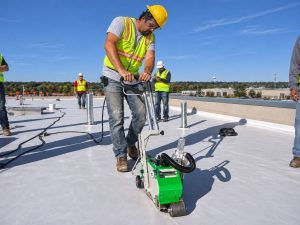
The repair that works on a white TPO roof may not work on a black rubber roof. The existing material determines what can bond to it and how seams and flashing should be repaired.
Single-Ply Roofs: TPO, EPDM, and PVC
These roofs use large sheets of flexible material. TPO and PVC seams are joined with hot air, while EPDM seams typically use compatible primer and tape. Older EPDM roofs may have glued seams. If you’re weighing membrane options, learn more about single-ply roofing in Murfreesboro, TN.
Metal Roofs
Loose screws, worn washers, and rust can leave openings around fasteners and panel joints. Depending on the condition of the panels, repairs may include replacing fasteners, resealing joints, or addressing corrosion.
Modified Bitumen Roofs
Modified bitumen uses asphalt-based roofing sheets. A repair may involve patching a worn area or resealing a loose overlap with materials suited to the existing system. Blisters and cracks should be checked before patching to see whether the damage extends below the surface.
Coatings
A coating needs a clean, dry, sound surface. Any failed seams, damaged flashing, or wet insulation must be addressed before coating. The existing roof material also helps determine which coating and primer can be used.
How We Plan and Run Your Project
A roof project has to fit the way your building operates. Before work starts, review these details with your contractor:
- Site visit: Point out leaks, previous repairs, roof access, and any areas inside that need extra protection.
- Written scope: Confirm which areas are included, what materials are specified, and how hidden damage will be handled if it turns up.
- Scheduling: Discuss business hours, deliveries, weather delays, and whether some tasks need to happen while the building is quieter.
- Project contact: Find out who handles questions, updates, and changes to the scope.
- Work areas: Confirm how the crew will manage entrances, walkways, parking, and material staging.
- Changes during work: Agree on how the contractor will document unexpected findings and get approval for extra work.
Checks Before We Call a Job Done
Final checks should match the type of roof and the work performed. A seam repair calls for a different review than a full replacement. Depending on the project, closeout can include:
- Checking new or repaired seams for gaps or lifted edges
- Reviewing flashing at walls, vents, pipes, and rooftop units within the work area
- Checking that affected drains, scuppers, or gutters are clear
- Removing leftover roofing materials and fasteners from the work area
- Taking photos of completed work and reviewing any items that need follow-up
- Providing applicable warranty documents and maintenance instructions
Confirm which checks and records are included in your proposal. Keeping photos, work notes, and any warranty documents together gives you a record to refer to when you plan maintenance or future repairs.

How to Pick a Commercial Roofing Company
If you’re comparing commercial roofing companies in Murfreesboro, ask each contractor the same questions so you can compare what’s included:
- Do you work on my type of roof?
- What work and materials will the written scope include?
- How will the work affect business hours, deliveries, and access?
- Who do I call if I have a question or the scope changes?
- What checks will you perform before the job is done?
- Which photos, records, and warranty documents will I receive?
Talk With Glick Roofing Systems Today
Glick Roofing Systems helps Murfreesboro businesses with roof inspections, repairs, maintenance, and replacement. Whether you’re dealing with a leak or budgeting for a new roof, start by finding out what condition your roof is in and what work it needs.
Call (800) 821-0205 to schedule a roof inspection or discuss your next commercial roofing project.
FAQs
1. What do commercial roofing companies in Murfreesboro, TN do?
They inspect, maintain, repair, replace, and install roofs on commercial buildings. Flat and low-slope roofs require particular attention to seams, flashing, and drainage.
2. What types of commercial roofs does Glick Roofing Systems work on?
Glick offers single-ply roofing in Murfreesboro, including TPO, EPDM, and PVC, as well as roof coating services. If you have a metal or modified bitumen roof, tell us what you know about the system and the work it needs when you call.
3. How often should a commercial roof be inspected?
Spring and fall are good times for routine inspections. An extra check after major hail or high winds can help catch damage that isn’t visible from the ground. Check your roof warranty for any required schedule.
4. How do I know if my roof needs repair or replacement?
An isolated puncture, loose seam, or flashing defect can often be repaired if the rest of the roof is sound. Widespread moisture, recurring leaks, or a deteriorated membrane may point toward replacement. An inspection helps establish how far the damage extends.
5. Can you work on my roof without shutting down my business?
Some roofing projects can proceed while the building stays open. It depends on the scope, roof access, and what happens inside the building. Discuss entrances, deliveries, noise, and any sensitive work areas when reviewing the schedule.
6. What happens when my roofing project is finished?
Closeout should cover the areas worked on, any items that need follow-up, and the records included in your proposal. Depending on the scope, that may include a final review of seams, flashing, and drainage, along with photos and applicable warranty paperwork.