
A roof can look fine from the parking lot and still have trouble on top. A seam can start to lift or a drain can fill with debris long before water drips onto a ceiling tile, a shelf of stock, or an office desk. Commercial roof inspections in Lebanon, TN, can help you catch these problems while they’re still small.
Glick Roofing Systems offers commercial roof inspections in Nashville, TN, and serves businesses in Middle Tennessee. If you own or manage a building in Lebanon, here’s what a visual roof inspection can cover, how photos and written findings help, and when a closer look calls for separate testing.
Why Lebanon Buildings Need Regular Roof Checks
Warehouses, stores, offices, and plants near I-40 often have flat or low-slope roofs. Common systems include TPO, EPDM, PVC, modified bitumen, built-up roofing (BUR), and metal. Summer heat, heavy rain, hail, and strong wind can all take a toll on seams, flashing, and drains.
Spring and fall are good times to schedule routine inspections. It also makes sense to book a check:
- After a major storm, especially one with hail or high winds
- After HVAC installation or other rooftop work
- Before buying, selling, or leasing a building
- When your warranty or insurance terms call for one
What a Commercial Roof Inspection Covers
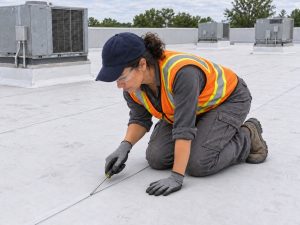
A visual inspection looks at accessible areas across the roof. The exact scope depends on the roof type, the condition of the building, and what the inspector can safely reach. Typical checks include:
- Roof surface: Look for damage or wear on the membrane, coating, or metal panels.
- Seams and laps: Check where roofing sheets or panels meet for lifting edges and open joints.
- Flashing: Look at the material that seals the roof where it meets walls, edges, and raised equipment curbs.
- Roof openings: Check around vents, pipes, HVAC units, skylights, and hatches.
- Drainage: Look for blocked drains, scuppers, gutters, or downspouts, and note low spots where water may collect.
- Edge metal and coping: Look for loose trim, open joints, or pieces that have shifted.
- Debris and traffic wear: Note leaves, loose materials, or worn paths around rooftop equipment.
When interior access is included, an inspector may also look for stains on ceilings and walls or visible changes on the underside of the roof deck. A visual check can flag sagging or other signs of damage, but it cannot determine the building’s structural condition.
Common Defects We Can See on the Roof
Many roof problems leave clues an inspector can see without opening the roof:
- Cracks, splits, punctures, or blisters in the membrane
- Open seams or edges that are starting to peel back
- Torn, loose, or pulled-away flashing
- Rust, loose fasteners, or gaps at metal panel joints
- Clogged drains or damaged strainers
- Worn, cracked, or peeling coatings
- Standing water or dirt rings that show where water has collected
If water is still standing about 48 hours after rain, the area deserves a closer look. On a dry day, dirt rings and debris lines can show where water collected, but they don’t tell you how long it stayed there.
Inside, water stains, damp spots, or musty odors can point to a moisture problem. They don’t pinpoint where water entered, since it can travel before it shows up indoors. If you have an active leak, report it when you call so it can be addressed promptly. Glick’s guide to commercial roof leak repair in Brentwood, TN, explains what to do when you notice one.
Photos and Written Findings: What You Get
Good inspection records show what the problem looks like, where it is, and what to do about it. A wide photo can show which rooftop unit or wall is nearby. A close-up can show the actual defect, such as a split seam or a crack in the flashing.
A useful written report puts those photos in context. It should tell you:
- Where each issue was found
- What the inspector observed
- Which items need attention soon and which can be monitored
- What repair, maintenance, or follow-up testing is recommended
These records can help you budget for repairs, track changes over time, and document the roof’s condition for warranty or insurance purposes. Confirm what documentation is included when you schedule the inspection.

What We Can See vs. What Needs Extra Testing
A visual inspection can identify open seams, punctures, damaged flashing, and other visible defects. It can also flag signs of a hidden problem. Confirming whether insulation is wet or tracing a leak with no visible source may take a separate test.
- Infrared scans: A thermal camera looks for temperature patterns that may indicate moisture beneath the surface. Those patterns may need confirmation.
- Moisture meter surveys: Readings taken across the roof can help narrow down areas that need further investigation.
- Core samples: A small opening lets a technician examine the roof layers directly. The opening must be patched afterward.
- Electronic leak detection or controlled water testing: These methods can help trace leaks when the roof assembly and site conditions allow.
Drone photos, where appropriate, can document visible conditions from above. They don’t test for moisture. Looking above a drop ceiling or inside a locked tenant space is also a visual check and depends on permission and safe access. Significant sagging or suspected structural damage may call for a separate review by a structural engineer.
If the visual findings point to a hidden problem, ask what additional testing would answer and what it would cost before authorizing it.
Why Lebanon Owners Choose Glick Roofing Systems
Glick Roofing Systems is a licensed and insured commercial roofing contractor. Its Nashville office serves businesses across Middle Tennessee. A roof inspection can help you decide whether you need a repair, routine maintenance, or another look at an area that’s starting to wear.
Book Your Commercial Roof Inspection in Lebanon, TN
You don’t have to wait for a ceiling stain to find out how your roof is holding up. Call Glick Roofing Systems at (615) 265-0598 to discuss your building and schedule a commercial roof inspection in Lebanon, TN. Mention any leaks, recent storms, or rooftop work so the inspection can focus on the areas that concern you.
Frequently Asked Questions
1. How much does a commercial roof inspection cost in Lebanon, TN?
Cost depends on roof size, access, and the scope of the inspection. If separate testing is recommended, ask what it includes and how it affects the quote. Call Glick Roofing Systems to discuss your building.
2. How often should a commercial roof be inspected?
Spring and fall inspections are a good starting point. Consider an extra check after a major storm or rooftop work, and before buying or selling a building. Check your roof warranty for any required inspection schedule.
3. How long does a commercial roof inspection take?
It depends on the roof’s size, layout, and accessibility. A large roof with several levels or many rooftop units will usually take longer to inspect than a small, open roof. Separate testing can add time.
4. Do I need to be there during the inspection?
You don’t necessarily need to attend. Arrange for someone to provide roof access and, if interior checks are included, access to the relevant rooms or tenant areas.
5. Can a roof inspection help with an insurance claim?
Dated photos and written observations can document the roof’s condition after a storm. Your insurer decides what the policy covers and may ask for additional information.
6. Can a visual inspection find every roof leak?
No. It can identify visible problems and help narrow down where to look next. If the source isn’t clear or moisture may be trapped in the roof layers, an infrared scan, moisture survey, or core samples may help confirm what’s happening.