
You’ve decided it’s time for a new flat roof. Now the questions start. Will the old roof come off? What’s underneath it? Will your business have to close? How do you know the job was done right?
A flat roof replacement in Gallatin, TN, starts with a plan for the existing roof, the new materials, and how the work will affect your building. The same questions come up on commercial roof replacement projects in Murfreesboro and elsewhere in Middle Tennessee. Here’s what to expect from the first roof assessment to the final walkthrough.
How a Flat Roof Replacement Works, Step by Step
Step 1: Tear-Off or Recover? Picking the Right Path
The first decision is what to do with the old roof. There are two main options:
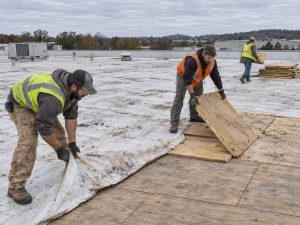
- Full tear-off: The old membrane, insulation, and other roof layers are removed down to the deck. This exposes the deck so damaged areas can be assessed and repaired.
- Recover: A new roof system goes over a suitable existing roof. This can reduce removal work and disposal costs when the building and roof qualify.
A recover depends on the applicable building code, the number and condition of existing roof coverings, the manufacturer’s requirements, and the structure’s ability to support the added weight. The existing roof must provide a dry, sound base.
Wet insulation can hide under a membrane that looks fine. An infrared survey can flag temperature differences that may point to trapped moisture. A core sample can show the condition of the layers at a specific spot; the opening must be patched afterward. Wet materials need to be removed before they’re covered. Widespread moisture or an existing roof that can’t serve as a sound base may make a tear-off necessary.
Before work starts, confirm the permit requirements for your address and who will apply. For buildings inside city limits, start with Gallatin Building Codes. For an unincorporated address, check with Sumner County Building & Codes.
Step 2: Checking the Deck
The deck supports the roof assembly. It may be steel, wood, or concrete. Once the old roof comes off, the exposed deck can be checked for damage such as:
- Corrosion or holes in steel decking.
- Soft or rotted wood.
- Cracks or deteriorated areas in concrete.
- Sagging sections or loose connections.
Unsound sections need to be repaired or replaced before new roofing goes over them. Since some damage is only visible after tear-off, ask how deck repairs will be documented, priced, and approved if they fall outside the original scope.
Step 3: Insulation That Does Its Job
Roof insulation slows heat transfer in summer and winter. Wet insulation can lose effectiveness and may no longer provide a sound base. Moisture findings help determine which areas need removal and replacement.
Where the assembly uses multiple layers of insulation board, staggered joints help reduce continuous gaps. Tapered insulation uses boards of different thicknesses to create slope toward drains or scuppers. If water kept pooling on the old roof, ask how the new design will address those low spots.
New insulation can improve thermal performance. Any effect on energy bills depends on the old and new roof assemblies and how the building is heated and cooled.
Step 4: Laying the New Membrane
The membrane is the waterproof layer on top. Common single-ply options include TPO, PVC, and EPDM. The best fit depends on the roof design, the building’s use, and the proposed assembly.
TPO and PVC seams are joined with hot air. EPDM seams typically use compatible primer and seam tape. Ask which membrane and attachment method the proposal specifies and how the finished seams will be checked.
Step 5: Flashing Around Every Edge and Opening
Flashing seals the places where the roof meets walls, edges, vents, pipes, skylights, and HVAC units. When reviewing a replacement proposal, look for details covering:
- Flashing at pipes and rooftop equipment curbs.
- Wall flashing height and how it is secured and sealed at the top.
- Roof edges and metal trim.
- Drain and scupper connections to the new membrane.
An isolated flashing defect may only need a flat roof repair, whether the building is in Gallatin or West Nashville. When the roof system is worn out, the replacement scope should spell out how these details will tie into the new membrane.

Step 6: Site Setup and Working Around Your Business
Some businesses can stay open during roof replacement. That depends on the scope, roof access, and what happens inside the building. Before work starts, discuss:
- Where trucks, dumpsters, and any lifting equipment will be staged.
- Which entrances, loading areas, and parking spaces may be affected.
- How people will move around the work area.
- Work hours, deliveries, and expected noise.
- Whether adhesives, odors, or nearby air intakes need special coordination.
Ask how unfinished roof areas will be protected at the end of the shift or if a storm interrupts work. A larger project may be divided into phases when the roof design and building operations allow it.
Step 7: Final Checks and Walkthrough
The final review should match the roof system and the work performed. It can include probing cooled TPO or PVC welds, checking flashing and edge details, verifying that drains and scuppers are clear, and confirming that debris has been removed from the work areas.
Before closing out the job, ask how the finished work will be reviewed with you or your property manager. Confirm which records are included, such as finished photos, maintenance instructions, and warranty paperwork. If the proposal lists the Glick-Guard Warranty, review the written terms for the proposed system.
Get a Clear Plan for Your Gallatin Flat Roof
Glick Roofing Systems offers commercial roof replacement in Middle Tennessee. If you’re planning a flat roof replacement in Gallatin, TN, start by finding out whether the existing roof can stay and how either option would affect insulation, drainage, and business access.
Call (800) 821-0205 or request a free roof quote online.
Frequently Asked Questions
1. How long does a flat roof replacement take in Gallatin, TN?
Timing depends on roof size, the extent of tear-off, deck repairs, access, and weather. Ask for a schedule based on the quoted scope and how it may change if hidden damage is found.
2. Can a new flat roof go over my old one?
Sometimes. The existing roof must be dry and sound, the structure must be able to support the added load, and the applicable code and manufacturer’s requirements must allow the proposed assembly.
3. Do I need to close my business during a roof replacement?
Some buildings can stay open, while others need temporary restrictions or phased work. Discuss entrances, deliveries, operating hours, and sensitive spaces such as food prep areas or equipment rooms before scheduling.
4. What happens to my old roof materials?
On a tear-off, removed membrane, insulation, and other debris are collected and hauled away for disposal. Confirm that your proposal includes disposal and explains where containers will go and when work areas will be cleaned.
5. What happens if the roof deck is damaged?
Unsound deck sections need to be repaired or replaced before the new roofing goes on. Ask how the contractor will document hidden damage and get approval for work outside the original quote.
6. How much does a flat roof replacement cost in Gallatin?
Cost depends on roof size, tear-off, deck repairs, insulation, membrane selection, and site access. An on-site assessment and written estimate can show what’s included and what may cost extra.