
Commercial roof restoration can extend the useful life of an existing roof, but only when the roof is a sound restoration candidate. For a Brentwood, TN property, that means evaluating membrane condition, moisture, drainage, deck condition, prior repairs, and compatibility before deciding whether coating, repair, or replacement makes sense. Glick Roofing Systems serves Brentwood within its Tennessee service area. Call (615) 265-0598 to discuss an assessment.
When Commercial Roof Restoration Makes Sense
Restoration sits between minor repair and full replacement. It can be a practical option when the existing roof is still serviceable enough to support a restoration system and when active defects can be repaired before the coating or restoration layer is installed.
The decision should not be based on age alone. A roof with localized seam, flashing, or surface defects may still be a restoration candidate if the surrounding assembly remains sound. A roof with widespread moisture, deteriorated decking, repeated failures, or other unresolved conditions may need a broader repair or replacement scope instead.
Glick’s current commercial roof repair and maintenance services provide a useful comparison point because the right path depends on whether the problems are isolated, recurring, or widespread.
Condition Requirements Before Restoration
A restoration proposal should explain why the roof qualifies. At minimum, the contractor should evaluate:
| Condition | What to Confirm | Why It Matters |
|---|---|---|
| Membrane or surface condition | Whether deterioration is isolated or widespread and whether damaged areas can be repaired before restoration | A coating should not be used to hide a roof surface that can no longer support the restoration system. |
| Moisture | Whether suspected wet areas are limited or widespread and whether important screening findings need confirmation | Saturated insulation or trapped moisture can change the project from restoration to removal and replacement of affected materials. |
| Deck and substrate | Whether the supporting deck is structurally sound and free of significant deterioration | Rotten or otherwise deteriorated decking needs corrective work that a surface coating cannot provide. |
| Drainage | Whether ponding comes from debris, blocked drainage, localized low areas, or an underlying slope or design problem | A coating does not correct the roof’s underlying drainage design. |
| Compatibility | Whether the existing membrane, prior coatings, repairs, primer, reinforcement, and proposed restoration products are compatible | Compatibility needs to be confirmed for the actual roof rather than assumed from the general roof type. |
Moisture Findings Need Context

Moisture screening can help identify areas that deserve closer investigation, but a scan should not automatically be treated as proof of saturated insulation. Roof construction, weather, surface conditions, and the method used can influence readings. Glick’s current site describes Roof MRI technology as a way to identify trapped moisture and concealed damage before major roofing decisions are made.
If a suspected wet area would materially change the restoration scope, the proposal should explain how that condition will be confirmed and what happens if wet insulation or damaged substrate is found. Restoration should not be used to cover unresolved moisture and assume the problem will disappear.
What Restoration Does Not Fix
A restoration coating does not rebuild rotten decking, remove saturated insulation, or correct every drainage problem. It also does not replace the need to repair open seams, failed flashing, punctures, or other defects before the restoration system is applied.
That is why the existing roof should be repaired and prepared first. Glick’s commercial roof restoration information can help owners compare restoration with other roofing options, but the final recommendation still needs to follow the condition of the individual building.
Preparation and Application Matter
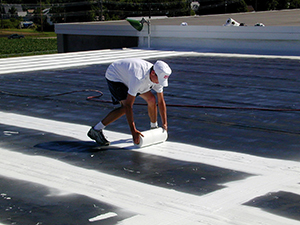
Even a suitable roof can perform poorly if preparation is incomplete. The restoration scope should define cleaning, removal of loose or failed material, repair of seams and flashing, treatment of eligible wet areas, primer or reinforcement when required, and the conditions under which the coating can be applied.
Application requirements should also be clear. Coverage, thickness, reinforcement, curing, weather conditions, and detail work around penetrations, edges, curbs, and drains all affect the finished system. The owner should receive a written scope that states what is included rather than relying on a generic promise that the roof will be “restored.”
Maintenance Duties Continue After Restoration
A restored roof still needs maintenance. The owner or facility team should keep drains and scuppers clear, report new leaks or punctures promptly, control unnecessary rooftop traffic, and retain inspection and repair records. The inspection schedule should follow the roof system, current condition, written warranty requirements, and any unusual events rather than one universal interval.
If a warranty is included with the project, the owner should review the actual written terms, maintenance duties, exclusions, and reporting requirements. Glick’s current site describes its Glick-Guard warranty program, but the specific coverage for a Brentwood restoration project should be confirmed in the project documents rather than assumed.
Commercial Roof Restoration in Brentwood, TN
For a Brentwood commercial property, the useful question is not whether restoration is always cheaper or longer-lasting than replacement. It is whether the existing roof is dry enough, structurally sound, repairable, compatible, and properly prepared for the selected system.
Call Glick Roofing Systems at (615) 265-0598 or use the contact page to discuss a commercial roof assessment.
Frequently Asked Questions
How do I know if my commercial roof qualifies for restoration?
The roof should be evaluated for membrane condition, moisture, deck condition, drainage, repair history, and compatibility with the proposed restoration system.
Can a roof coating fix saturated insulation or rotten decking?
No. Wet insulation and deteriorated decking need their own corrective scope before restoration can be considered complete.
Does roof restoration eliminate future maintenance?
No. The restored roof still needs inspections, drainage upkeep, prompt repair of new damage, and any maintenance required by the written project or warranty documents.
How long will a commercial roof restoration last?
Service life depends on the roof’s starting condition, preparation, repairs, restoration system, application quality, exposure, maintenance, and future rooftop activity.