
Your roof keeps rain and wind away from the people, equipment, and inventory inside your building. Regular care helps you catch small problems early and plan for larger work when the time comes. If the roof is too worn for repairs to hold, flat roof replacement may be the better option for your Murfreesboro building.
Glick Roofing Systems offers commercial roofing services in Murfreesboro, TN, including inspections, maintenance, repairs, restoration, and replacement. Call (800) 821-0205 to talk with our team about what your roof needs.
What Do Commercial Roofing Services Include?
Many commercial buildings have flat or low-slope roofs. These roofs need a clear path for water to drain and sound flashing around HVAC units, vents, and pipes. The right service depends on what the roof needs now:
- Inspections document the roof’s condition and identify areas that need attention.
- Routine maintenance keeps drains clear and catches loose or worn details.
- Repairs address localized problems such as tears, open seams, and damaged flashing.
- Restoration can extend the life of an older roof that is still dry and sound.
- Replacement is an option when damage is widespread or the existing roof can no longer be repaired reliably.
The Roof Inspection
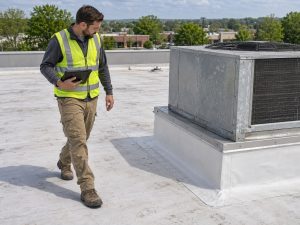
An inspection helps you understand the condition of the roof before paying for repairs. A visual check of accessible areas can cover:
- Seams where sheets or panels meet.
- Flashing around edges, walls, vents, and rooftop equipment.
- Drains and gutters for debris, damage, or signs of backed-up water.
- Seals around pipes, vents, and HVAC units.
- The roof surface for cracks, blisters, punctures, and signs of wear.
Where interior access is available, ceiling or wall stains can help narrow down a leak investigation. A visual inspection can flag clues, but it may not show how far water has spread beneath the surface.
Glick Roofing Systems offers detailed roof reports. When you book, confirm what documentation is included. Dated photos, defect locations, and recommended next steps can help you decide what to fix now and what to monitor.
How Often Should You Inspect?
Spring and fall are good times for routine inspections. Arrange an additional check after major hail or high winds, and follow any inspection schedule in your roof warranty.
Roof Maintenance
Routine upkeep helps catch small problems before they lead to leaks. Common roof maintenance tasks include:
- Clearing leaves, dirt, and trash from drains.
- Checking loose flashing and securing it where needed.
- Checking seals around pipes and vents for gaps.
- Removing debris that could damage the roof surface.
- Looking for areas where water repeatedly pools.
Why Drainage Matters So Much
Flat roofs need enough slope and clear outlets to carry water away. A blocked drain or low spot can leave standing water, which adds weight and keeps seams and flashing exposed to water longer. If water repeatedly collects in the same place after drains are cleared, have a roofer check the slope and drainage layout.
How Upkeep Helps Your Energy Bills
Dry insulation helps slow heat transfer through the roof. When insulation gets wet, it can lose some of its effectiveness. Finding and fixing leaks early helps protect that insulation. The effect on heating and cooling bills depends on the building and its existing roof assembly.
Repairs and Follow-Up Work
Inspections often turn up small problems that can be repaired before they spread. Common examples include:
- Patching a small hole or tear with compatible material.
- Repairing an open seam.
- Replacing a damaged section of flashing.
- Repairing a failed seal around a pipe or vent.
Water can travel beneath the roof surface and soak insulation or damage the deck. Finding the entry point early can keep a localized repair from turning into a larger job.
Roof Restoration
An older roof that is dry and sound may qualify for commercial roof restoration. A coating system can add a protective surface after the roof is repaired and prepared. A reflective coating can also reduce heat absorbed at the roof surface. Widespread moisture or serious deck damage can make replacement the better choice.
When Replacement Is the Right Call
Repairs may no longer be enough when:
- Leaks keep appearing in new areas.
- Testing finds widespread moisture beneath the roof surface.
- Seams are separating across much of the roof.
- The roof is nearing the end of its useful life and repair costs are adding up.
An inspection, with moisture testing when needed, helps you compare the cost and expected results of repair, restoration, and replacement.
Single-Ply Roof Work

Single-ply roofs use large sheets of TPO, PVC, or EPDM. During routine checks, pay close attention to seams, edges, and flashing around equipment. Repair materials and methods need to match the membrane. Learn more about single-ply roofing in Murfreesboro, TN.
How Roof Care Protects Your Whole Building
A roof protects the ceilings, walls, equipment, and inventory beneath it. A small leak can damage insulation before anyone sees a ceiling stain. If it spreads, you may have to move stock or close part of the building for repairs.
Regular checks give you a chance to address damage before it reaches occupied areas. They also help you budget for larger repairs or replacement instead of deciding during an active leak.
Why Murfreesboro Businesses Choose Glick Roofing Systems
Murfreesboro’s hot summers, heavy rain, and occasional freezes can all take a toll on roof seams, flashing, and drainage. Glick Roofing Systems offers maintenance and repair as well as restoration and replacement. That gives owners options when a roof shows signs of wear.
When comparing those options, ask what the inspection found, how much of the roof is affected, and what each scope covers. An isolated defect may only need a repair, while widespread moisture or recurring leaks can justify a larger project.
Get Started With a Roof Inspection Today
An inspection can help you decide what needs attention now and what can wait. To discuss commercial roofing services in Murfreesboro, TN, call Glick Roofing Systems at (800) 821-0205 or contact us online.
Frequently Asked Questions
1. What do commercial roofing services include?
They can include roof inspections, routine maintenance, leak repairs, restoration, and full replacement. The right service depends on the roof’s type, age, condition, and extent of damage.
2. How often should a commercial roof be inspected?
Schedule routine checks in spring and fall, plus an additional inspection after major hail or high winds. Follow your warranty if it requires a specific schedule.
3. What happens during a commercial roof inspection?
A roofer checks accessible areas such as seams, flashing, drains, vents, and the roof surface. Where interior access is available, they may look for stains or other signs of a leak. Glick offers detailed roof reports; confirm whether photos, repair priorities, or separate testing are included in your inspection scope.
4. Why is regular roof upkeep important?
Clearing drains, catching open seams, and repairing loose flashing can help prevent water from reaching the roof layers. Fixing isolated damage early may also reduce the need for more extensive repairs later.
5. How do I know if my roof needs repair or replacement?
Repair often makes sense when damage is isolated and the surrounding roof is dry and sound. Widespread moisture, recurring leaks, or a failing membrane may point toward replacement. Compare the findings, costs, and expected results before choosing.
6. Can a well-kept roof lower my energy bills?
Maintenance helps protect insulation from water damage so it can continue slowing heat transfer. Any effect on energy bills depends on the roof assembly, insulation, and how the building is heated and cooled.