

Many flat roof leaks start at a seam, around a pipe, or near a low spot where water collects after a storm. When you shop for a new roof, pay as much attention to how it will be installed as you do to the membrane itself.
If you own a warehouse, shop, office, or church in Wilson County, this guide explains what goes into TPO roofing in Lebanon, TN. From membrane thickness to the last drain detail, here’s what to look for and what to ask your roofer before you sign.
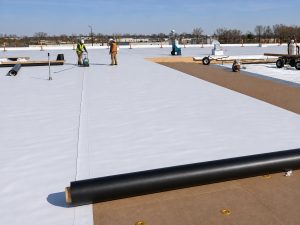
What Is TPO Roofing?
TPO stands for thermoplastic polyolefin. It’s a single-ply roofing membrane, meaning one layer of flexible sheet material covers the roof assembly. TPO comes in wide rolls and is commonly white.
The crew lays out the sheets over a suitable base, secures them according to the roof design, and joins the overlaps with hot air. Each step affects how well the finished roof performs.
Material Benefits vs. Installation Details
Some benefits come from the membrane. Others depend on how the roof is designed and installed.
What the material gives you:
- A reflective surface when white TPO is specified. It can reduce the heat the roof absorbs in summer, though cooling savings vary by building.
- A flexible sheet designed for outdoor exposure and temperature changes.
- Sheet overlaps that can be joined with hot air.
What depends on the installation:
- Seams that are properly welded and checked for gaps.
- Attachment suited to the building’s wind exposure.
- Sealed flashing around pipes, vents, and HVAC units.
- Enough slope to move water toward the drains.
Even a sound membrane can leak if a seam is open, flashing is loose, or water keeps collecting around a weak detail. Ask how the proposal handles each of those points.
Picking the Right Membrane
Common TPO thicknesses include 45, 60, and 80 mil. A mil is one-thousandth of an inch. A thicker sheet can provide more protection against punctures, but thickness is only one part of the roof design.
- Foot traffic: Ask whether regular service routes need walkway pads or a thicker membrane.
- Rooftop equipment: More HVAC units and vents mean more flashing details and more areas where workers may walk.
- Budget: Compare the cost of the full assembly, including insulation, attachment, flashing, and any needed drainage work.
- Warranty: Confirm that the membrane thickness and the proposed assembly qualify for the coverage listed in the bid.
A small Lebanon office with little rooftop traffic may have different needs than a warehouse with several units that need regular service. Ask why the proposed membrane fits your building. Glick Roofing Systems lists Carlisle, GAF, and Duro-Last among its manufacturing partners. Check your proposal for the specific product and assembly.
Seams: The Most Important Part
Seams are where two sheets overlap. A hot-air welder heats the overlapping surfaces so they fuse. The weld depends on clean, dry material and the right heat, speed, and pressure.
A careful installation includes:
- Cleaning and drying the areas to be welded.
- Adjusting welder settings for site conditions.
- Making test welds before production welding and repeating them as conditions change, following the manufacturer’s instructions.
- Probing cooled seams to find gaps and checking repaired areas again.
A seam can look closed from above and still have a small gap at the edge. Probing helps find those openings before rain does.
How the Roof Is Attached
TPO needs to be secured as part of a roof assembly designed for the building’s wind exposure. Three common methods are:
- Mechanically attached: In a typical seam-fastened system, screws and plates secure the membrane near the sheet edge. The next sheet covers the fasteners, and the overlap is welded.
- Fully adhered: An approved adhesive bonds the sheet to a suitable insulation board or cover board. The product’s temperature and surface requirements can affect installation timing.
- Induction welded: Fasteners secure specially coated plates beneath the membrane. A tool bonds the sheet to those plates from above without driving fasteners through the exposed membrane.
The right method depends on the deck, the building’s height and wind exposure, and the tested roof assembly. Ask how the proposed design handles edges and corners, where wind can pull harder than it does in the middle of the roof.
Penetrations: Pipes, Vents, and Equipment
Vent pipes, drains, skylights, and HVAC units create openings that need their own details. A compatible preformed pipe boot can be welded to the membrane and sealed at the pipe. Flashing around an HVAC unit runs up the raised curb and ties into the main membrane according to the system’s specifications.
These details need attention after installation, too. Our guide to TPO roofing in Hendersonville, TN discusses roof care. The same checks matter in Lebanon: look for damaged flashing or gaps around rooftop units and vents before they let water under the membrane.

Drainage: Keep Water Moving
A flat roof still needs enough slope to send water to drains, scuppers, or gutters. If water is still there about 48 hours after rain stops, have a roofer check for a blocked outlet or a low spot. Standing water adds weight and can expose weak seams or flashing to water for longer.
Drainage should be planned before the first sheet goes down. The design may include:
- Tapered insulation to create slope above the deck.
- Crickets, or small raised areas, to steer water around equipment and toward outlets.
- Clear drains and scuppers sized for the roof’s drainage needs.
If water keeps collecting in the same place, ask how the new roof design will correct it.
Why Lebanon Property Owners Choose Glick Roofing Systems
Glick Roofing Systems provides commercial roofing services in Middle Tennessee from its Nashville office. When comparing TPO proposals for a Lebanon building, look for a written scope that identifies the membrane, seam checks, attachment method, flashing details, and drainage plan.
Glick Roofing Systems offers the Glick-Guard Warranty. Ask which coverage applies to your proposed roof and review the written terms. Manufacturer coverage has its own requirements, which can include an approved assembly, installation details, inspections, and ongoing maintenance.
To discuss TPO roofing in Lebanon, TN, call Glick Roofing Systems at (615) 265-0598 or request a quote online.
FAQs About TPO Roofing in Lebanon, TN
1. How long does a TPO roof last?
Service life depends on the membrane, installation quality, drainage, weather exposure, and upkeep. Regular checks and prompt repairs can help extend it. Ask about the expected service life and warranty term separately.
2. How much does TPO roofing cost in Lebanon, TN?
Cost depends on roof size, membrane thickness, insulation, the number of penetrations, and whether the old roof must come off. An on-site assessment and written estimate can give you a price based on your building.
3. Is TPO good for Tennessee weather?
It can be a good fit for a commercial roof designed for the building’s exposure. White TPO reflects sunlight, while the welded seams, wind-rated assembly, flashing, and drainage help the roof handle rain and spring storms.
4. Can a new TPO roof go over my old roof?
Sometimes. The existing roof must provide a dry, sound base, the proposed assembly must be compatible, and the applicable building code must allow a recover. Moisture testing may help assess the existing roof. Wet materials need to be removed before they’re covered.
5. How long does a TPO install take?
Timing depends on roof size, tear-off, deck repairs, site access, and weather. Ask for a schedule based on the work included in your proposal.
6. How often should I have my TPO roof inspected?
Spring and fall are good times for routine inspections. Arrange an extra check after a major storm, and follow any inspection schedule in your roof warranty.