
If your commercial roof is showing its age but still doing its job for the most part, you may have more options than a full tear-off. A roof restoration can add years of service to a roof that still has good bones, and at Glick Roofing Systems we have built our work around exactly that. Plenty of owners in Bowling Green, KY replace a roof that could have been saved. Call us at (800) 821-0205 to find out which camp your roof falls in.
How Many Years Can Roof Restoration Add
A roof restoration can typically add 10 to 15 years of service to a commercial roof that is still structurally sound. The exact number depends on the roof’s current condition, the system type, and the treatment used. The point of restoration is simple. You get a second life out of a roof instead of paying to remove it. For a commercial building, that can mean putting off a major capital expense for more than a decade.
In this article we cover how to tell if your roof is a candidate, how restoration slows the aging that wears a roof out, and when a roof is genuinely past saving.
What Makes a Roof a Good Restoration Candidate

A roof is a good restoration candidate when the surface is worn but the structure underneath is still solid. Restoration treats the top layer. It cannot rescue a deck that is rotting or insulation that is soaked through, so we scan a roof before recommending anything. A roof that still drains well and has held up structurally is usually a strong candidate even when the surface looks rough.
A few specific things tell us a roof can be restored. The membrane should be aging or weathered but not split open across large areas. The deck and structure underneath need to be sound and still carrying their load. The insulation has to be dry, which we confirm with infrared and moisture scanning rather than guessing. And any leaks should be limited and traceable, not widespread saturation running through the whole system.
How Roof Restoration Slows the Aging Process
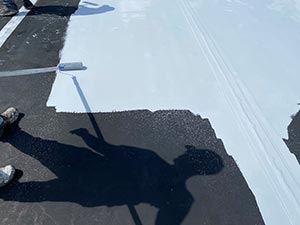
Roof restoration slows aging by sealing the surface back up and laying a fresh, protective layer over the old one. Most commercial roofs do not fail all at once. They break down slowly as sun, water, and temperature swings attack the membrane and open the seams.
The new surface reflects the sunlight and ultraviolet rays that would otherwise keep degrading the material, and it re-seals the seams and flashings where leaks usually begin. In Kentucky, where summers run hot and humid and winters bring freeze and thaw, that matters. The daily expansion and contraction is what slowly tears an older roof apart.
Why Some Roofs Are Past Roof Restoration
Some roofs are simply too far gone, and an honest contractor will say so. If the deck is failing, the insulation is wet across large areas, or the membrane is shot, a restoration would buy only a few months before the same problems return. Coating over a wet roof traps the damage instead of fixing it.
This is the part some companies skip. We would rather tell you a roof needs replacing now than sell you a restoration that fails early and costs you twice. The scan tells us the truth, and we hand it straight to you. Spending restoration money on a roof that is already failing is the one outcome we work hardest to help you avoid.
Get More Life Out of the Roof You Have
For the right roof, a roof restoration is one of the smarter moves a building owner can make. It stretches your investment, skips the disruption of a tear-off, and keeps a sound roof working for years longer. The trick is knowing whether your roof qualifies.
At Glick Roofing Systems, we assess commercial roofs across Bowling Green, KY and tell you honestly whether restoration or replacement makes more sense. Call us at (800) 821-0205 to schedule a roof restoration assessment.
FAQ
How do I know if my commercial roof is a candidate for restoration rather than replacement?
If your roof is past 10 years old, still drains well, and has no widespread wet insulation, it is usually worth a restoration evaluation.
How many additional years of service life can a restoration add to a commercial roof?
Most add 10 to 15 years, and many systems can be recoated again afterward to push the roof even further.
What types of roofing systems respond best to commercial roof restoration treatments?
Single-ply membranes, metal, and modified bitumen respond best, while roofs with soaked insulation or constant ponding are poor fits.