

Many commercial buildings in Nashville, TN have built-up roofing systems that have been in service for years. When leaks or other problems develop, understanding the roof’s condition is important before deciding whether repairs are worthwhile. Built up roof repair can address localized damage and extend the system’s service life when the underlying roof remains in suitable condition.
Glick Roofing Systems handles built up roof repair in Nashville, TN. Call (800) 821-0205 to have your commercial roof evaluated and determine the right repair approach.
Addressing problems at the right stage can help control repair costs, prevent additional damage, and get more service life from an existing built-up roof.
Built Up Roof Repair Explained Clearly
Built-up roofing, often called tar and gravel roofing, is a traditional flat roof system made from alternating layers of bitumen and reinforcing felt. These layers form a thick, durable membrane that is typically finished with gravel or a protective cap sheet.
The layered construction is one reason many built-up roofs remain in service for decades. However, effective repairs require understanding how those layers work together and determining how deeply moisture or damage has penetrated the roofing system.
How is a Built-Up Roof Constructed?
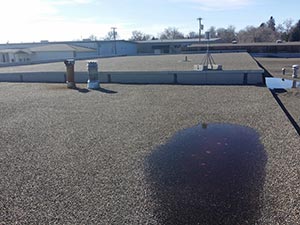
Each ply, or layer of felt set in bitumen, adds another level of protection. This layered design helps prevent a small surface flaw from immediately reaching the roof deck, while the gravel or cap sheet protects the bitumen from sun exposure and foot traffic.
Over time, however, the bitumen gradually loses its oils and becomes brittle. The surface begins to wear down, and the layers can start to separate. This slow aging process is behind many of the problems that eventually develop in built-up roofing systems.
Common Failure Points and Their Repairs
A few problems tend to appear repeatedly on built-up roofs. Blisters form when air or moisture becomes trapped between the layers, causing them to separate. These damaged areas are typically removed and patched back to solid roofing material. Splits and cracks caused by movement can also develop and usually require cleaning, reinforcement, and sealing.
Flashing around roof edges and penetrations often fails before the main roof surface, so rebuilding these areas can resolve leaks while the rest of the roof remains in good condition. Ponding water requires more than a patch. The underlying drainage issue needs to be corrected, or standing water can continue to weaken the surface and eventually cause the surrounding layers to separate.
When Built Up Roof Repair Makes Sense
Repair is the right call when the problems are localized and the rest of the roof still has life. A few blisters, a run of failed flashing, or one ponding area on an otherwise solid roof are all worth fixing. Caught early, each of those stays a small, contained repair.
The math changes when moisture has spread through the layers across the roof or the felts have gone brittle everywhere. Once water saturates the system widely, patching only chases leaks, and a restoration or replacement becomes the honest recommendation. A moisture survey is how that call gets made with evidence instead of a guess.
Built Up Roof Repair on an Aging Nashville Roof
An older built-up roof should be carefully evaluated before replacement is considered. When the roofing system remains in suitable condition, targeted built up roof repair can address specific failure points and help property owners get more service life from the existing roof. A professional assessment can also identify when deterioration has progressed too far for repairs to remain practical.
Glick Roofing Systems handles built up roof repair in Nashville, TN. Call (800) 821-0205 today to have your commercial roofing system evaluated.
The right repair approach can extend roof life, reduce unnecessary replacement costs, and help property owners make informed decisions about the future of their roofing system.
FAQ
How long does a built-up roof typically last?
A built-up roof often serves 20 to 30 years, and heavier systems with more plies and steady maintenance reach the upper end. The gravel or cap surface and how well ponding is controlled have a large effect on where a given roof lands.
Can a built-up roof be coated or restored instead of replaced?
If the plies underneath are still dry and structurally sound, a coating or restoration can seal the surface and add years before a replacement is needed. That option closes once moisture has saturated the layers, which a scan will reveal.
How can I tell what condition my built-up roof is really in?
Because the trouble hides under the gravel and between the plies, a core sample and a moisture scan give the clearest read. Together they show how many layers remain sound and where water has already gotten into the system.