

For a commercial building in Brentwood, TN, a roof coating can be a useful restoration option when the existing roof is compatible and still suitable to remain in place. The decision should depend on moisture, substrate condition, drainage, adhesion, and required repairs rather than on roof age alone. Glick Roofing Systems provides commercial roof coating and restoration services in the Nashville-area market. Call (615) 265-0598 to discuss an evaluation.
What Are Commercial Roof Coatings and How Do They Work?
Commercial roof coatings are liquid-applied restoration systems installed over a prepared existing roof surface. Glick Roofing Systems provides acrylic and silicone roof coating and restoration services. When the roof is a suitable candidate and the system is installed correctly, the cured coating creates a continuous protective surface over the existing roof.
A coating should not be treated as a way to cover unresolved roof problems. The existing assembly still needs to be evaluated for moisture, damaged substrate, drainage problems, incompatible materials, and repairs that must be completed before application. Glick’s commercial roof restoration information provides additional context on how restoration fits between repair and replacement.
The Benefits of Commercial Roof Coatings for Your Business
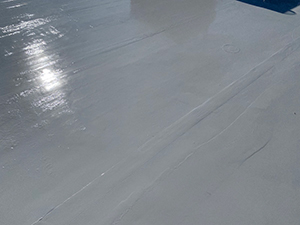
Preserving a suitable existing roof. A coating can extend the useful service period of a roof that remains a sound restoration candidate. The actual added service life depends on the existing system, preparation, repairs, coating specification, installation quality, exposure, and maintenance. A fixed lifespan should not be assumed before the roof is evaluated.
Reflective surface options. Reflective coatings can reduce solar heat absorbed at the roof surface compared with darker surfaces. The effect on building energy use depends on insulation, HVAC operation, occupancy, existing roof color, climate, and the coating selected, so cooling-cost savings should be treated as building-specific rather than guaranteed.
Less tear-off when restoration is appropriate. A coating project may avoid or delay a full tear-off when the existing roof can remain in service. That can reduce material removal and may limit disruption compared with some replacement projects, but access, odors, weather, staging, and building operations still need to be planned for the actual project.
Is Your Brentwood Roof a Good Candidate for a Coating System?
The most useful comparison is based on the roof’s current condition. Coating suitability should be confirmed through inspection and any additional testing needed to understand moisture, adhesion, and substrate conditions.
| Condition | Repair | Coating / Restoration | Replacement |
|---|---|---|---|
| Moisture | Localized conditions may support targeted repair after the extent is confirmed. | Saturated insulation must be addressed before coating; widespread moisture can make restoration unsuitable. | May be considered when moisture or damaged materials are too extensive for practical localized correction. |
| Substrate condition | Localized defects may be repairable when surrounding materials remain serviceable. | The remaining roof must provide a suitable surface and support for the restoration system. | Rotten decking or widespread deterioration can require broader removal and replacement. |
| Drainage | Minor localized defects can be repaired, but the cause of recurring ponding still needs evaluation. | Coating does not correct an underlying slope or drainage defect. | A larger project may be appropriate when drainage correction requires substantial assembly changes. |
| Adhesion and compatibility | Repairs must use materials compatible with the existing roof. | The selected coating, primer, and preparation must be compatible with the existing surface and meet project requirements. | Replacement may be compared when the existing assembly cannot provide a suitable restoration surface. |
Coating does not repair rotten decking, remove saturated insulation, or solve a ponding-water drainage defect simply by covering it. Those conditions need to be corrected as part of the project scope or may point toward a different roofing option.
How a Proper Coating Project Should Be Evaluated
A coating project should begin with inspection and condition documentation. Required repairs are completed first, followed by cleaning and other surface preparation. Depending on the roof and selected system, the scope may also call for primers, adhesion checks, detail reinforcement, and specified application coverage or thickness.
Acceptance should be tied to the written system requirements rather than appearance alone. The contractor should document completed repairs and application, address punch-list items, and explain any cure or weather limitations. A follow-up inspection can then confirm that the installed work matches the agreed scope and identify conditions that still need monitoring.
Choosing the Right Commercial Roof Coating Contractor
Ask a contractor to explain why the roof qualifies for restoration, what moisture or adhesion evidence supports that conclusion, what preparation and repairs are included, which conditions are excluded, and how completed work will be accepted. Warranty terms should also be reviewed from the actual written documents rather than assumed from a general coating lifespan.
Quality Commercial Roof Coatings
Commercial roof coatings can be a practical option for a Brentwood building when the existing roof is dry enough, structurally suitable, compatible with the proposed system, and free of unresolved drainage problems that coating cannot correct. If those conditions are not present, continued repair or commercial roof replacement may deserve comparison instead.
Call Glick Roofing Systems at (615) 265-0598 to discuss whether your Brentwood commercial roof is a suitable restoration candidate.
Frequently Asked Questions
How long can a commercial roof coating last?
Service life varies with the coating system, existing roof condition, preparation, installation, exposure, and maintenance. Review the specific proposed system and written warranty instead of assuming a universal lifespan.
Can a roof coating fix saturated insulation or rotten decking?
No. Wet insulation and deteriorated decking need to be addressed directly, and widespread damage can make coating an unsuitable restoration option.
Can coating solve a ponding-water problem?
No. Coating can protect a suitable surface, but it does not correct the underlying slope or drainage condition that causes recurring ponding.
How should I compare coating with roof replacement?
Compare moisture, substrate condition, drainage, compatibility, required repairs, preparation, project disruption, and the written scope and warranty for each option.