

Smyrna’s commercial and industrial buildings cannot afford the downtime a roof replacement brings, which is why so many owners look hard at how long a roof will truly last before they replace it. EPDM roofing has built its reputation on staying watertight for decades, and the reasons behind that longevity are worth understanding.
For related commercial roofing guidance in Smyrna, see TPO roofing in Smyrna.
Call Glick Roofing Systems at (800) 821-0205 for EPDM roofing in Smyrna, TN.
EPDM Roofing & Longevity
EPDM is a synthetic rubber membrane, and rubber is the root of its long life. It remains a single flexible sheet over the roof rather than a material that grows stiff and breaks down quickly. That basic durability is why EPDM has been trusted on commercial roofs for more than forty years, long enough to prove itself across real decades rather than lab estimates.
Long service life is not an accident of the material. It comes from a handful of specific properties working together against the things that age a roof. Understanding those properties tells a building owner what they are paying for, and what it takes to get the full lifespan out of the membrane.
UV, Ozone, and the Forces That Age a Roof
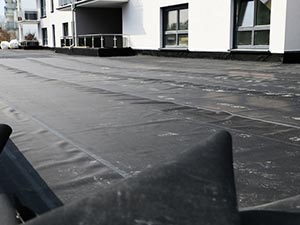
Sunlight is the first enemy of any roof. Ultraviolet radiation breaks down most roofing materials over the years, drying them out and making them brittle. EPDM is formulated to take constant UV exposure without that breakdown, which matters under Tennessee’s long, sunny seasons. The membrane holds its flexibility instead of cracking.
Ozone is the second factor. Ozone is a reactive gas in the air that degrades many materials over time, and EPDM resists it where lesser products would harden.
The third consideration is thermal cycling. The roof expands in heat and contracts in cold every single day, and that constant movement fatigues a rigid material until it fails. Because EPDM flexes with the building, it absorbs that daily cycle year after year without losing its seal. Those three resistances, to UV, ozone, and temperature swing, are the core of why the membrane reaches the lifespans it does.
Getting the Most from EPDM Roofing
A long potential lifespan only pays off if the roof is cared for, and the good news is that EPDM asks very little. The single biggest factor is keeping up with inspections so small issues are caught before they spread. The seams, where sheets join, and the flashing around penetrations are the spots that need attention, because the open field of the membrane rarely fails first.
Keeping the roof clear of debris and standing water helps too, since pooled water and trapped grit wear on any membrane over time. None of this is demanding. A roof that gets a periodic professional inspection and prompt attention to minor seam or flashing issues routinely outlasts one that is ignored until a leak appears. For a Smyrna building where replacement means potential operational disruption, that easy upkeep protects the investment.
Smyrna EPDM Roofing Specialists
The durability that makes EPDM roofing a decades-long performer comes from a rubber membrane engineered to shrug off UV, ozone, and constant temperature swings, paired with light, consistent upkeep. For an owner who wants to put off the cost and disruption of replacement as long as possible, that combination is hard to beat. For EPDM roofing in Smyrna, TN contact Glick Roofing Systems at (800) 821-0205 today.
FAQ
How long does an EPDM commercial roof typically last, and what affects its lifespan?
Many EPDM roofs serve several decades, with installation quality, upkeep, and how much standing water the roof sees making the biggest difference.
What maintenance helps an EPDM roof reach its maximum service life?
Regular inspections, keeping seams and flashing sound, and clearing debris and ponding water are the main practices that stretch the lifespan.
When does an aging EPDM roof need replacement rather than repair or coating?
Once seams fail widely, the membrane shrinks or thins across large areas, or leaks recur in multiple spots, replacement usually beats another patch.